
Every Halloween, we’re reminded of classic horrors that have haunted our screens. One such terror is Chucky, the doll with a sinister smile. Learning how to draw Chucky not only lets you dive into the realms of horror sketches but also challenges your artistry. With his intricate details and eerie presence, this spooky doll promises a rewarding drawing experience.
Chucky’s Appearance: Key Aspects to Focus On
When thinking of Chucky, specific attributes stand out, making him a unique subject to draw:
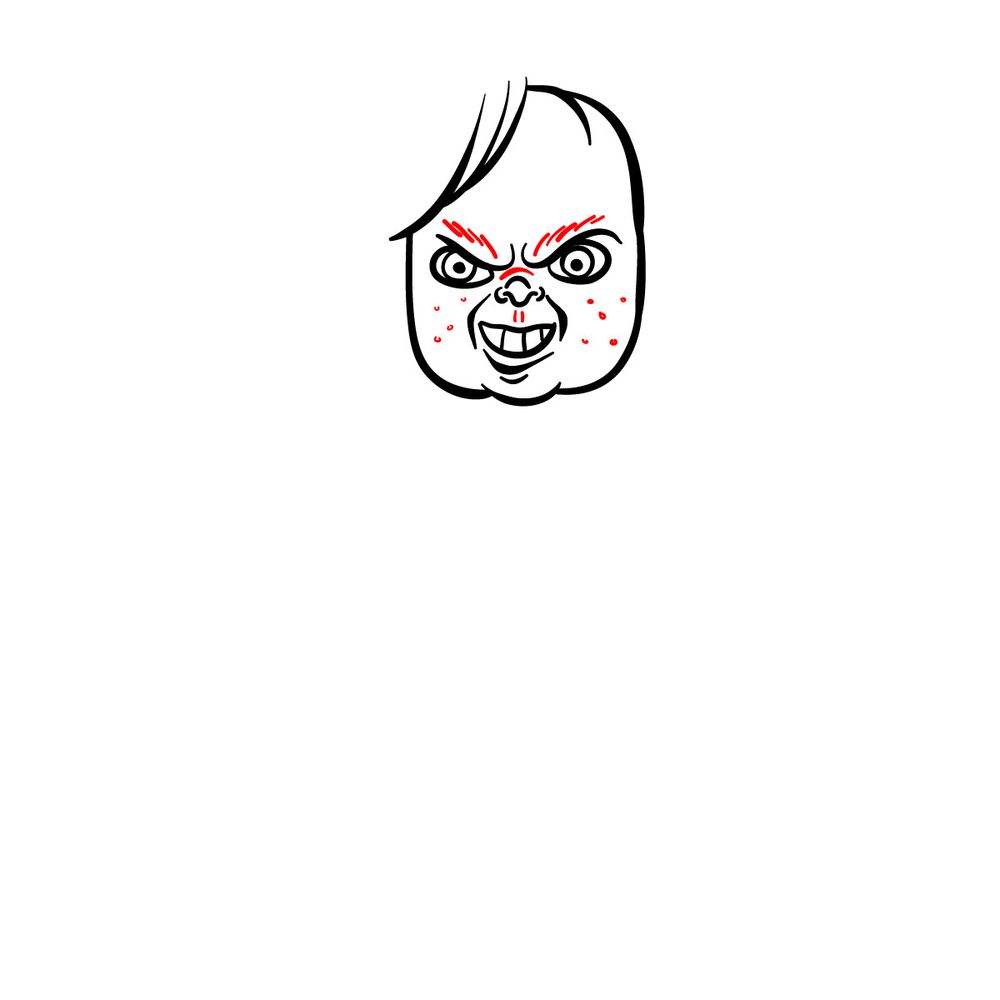
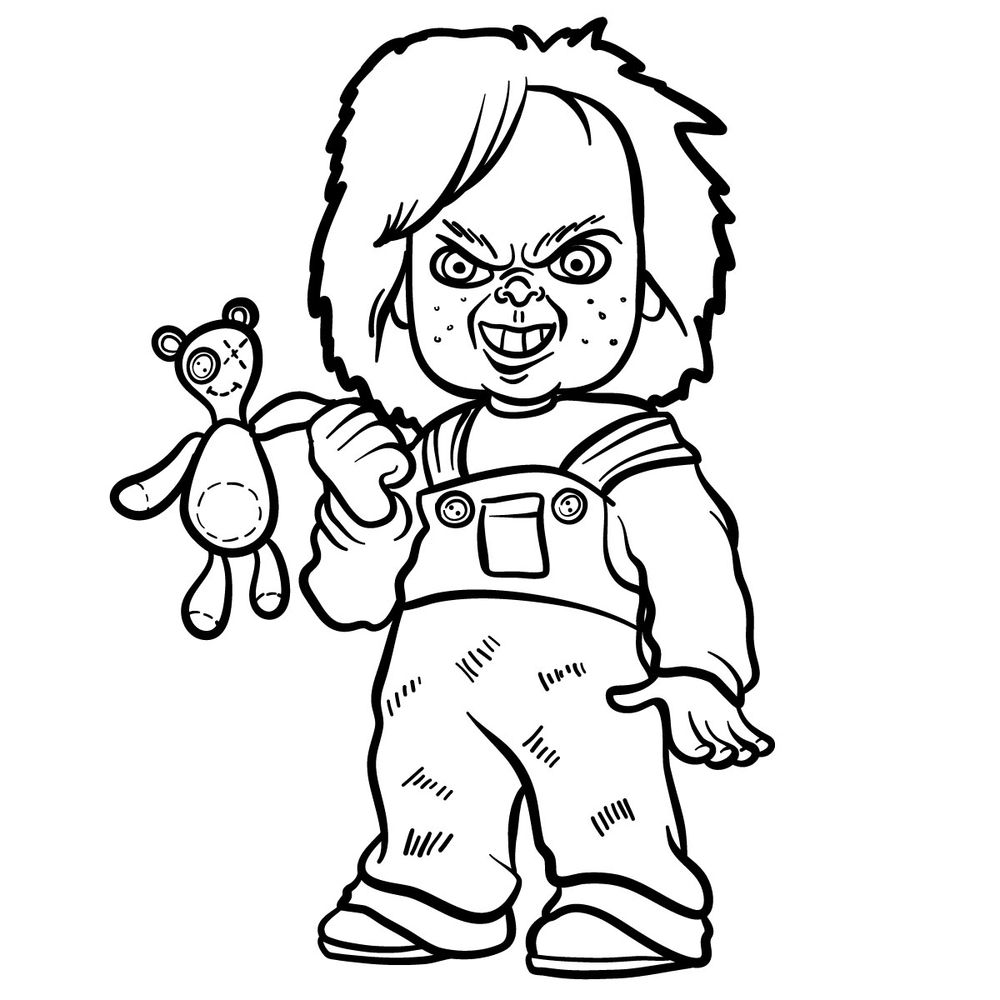
- Facial Expression: Chucky’s menacing smile is his signature feature. It’s more than just a curve; it’s an embodiment of his character’s essence.
- Cartoonish Structure: While Chucky is a source of horror, the aim is to capture his form in a cartoonish style, maintaining a balance between his creepy aspects.
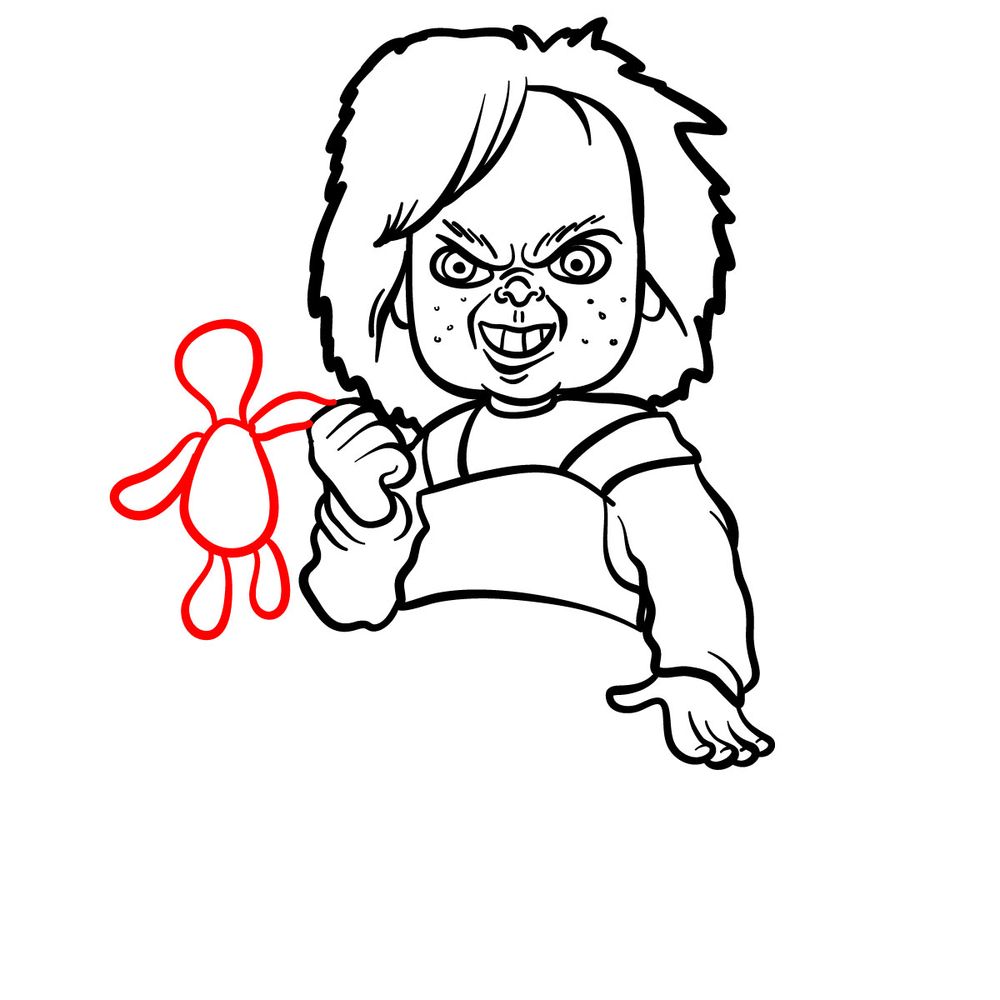
- Accessories: The small teddy bear he holds adds a contrasting innocence to his sinister appearance.
- Eyes: His eyes should reflect mischief and malevolence.
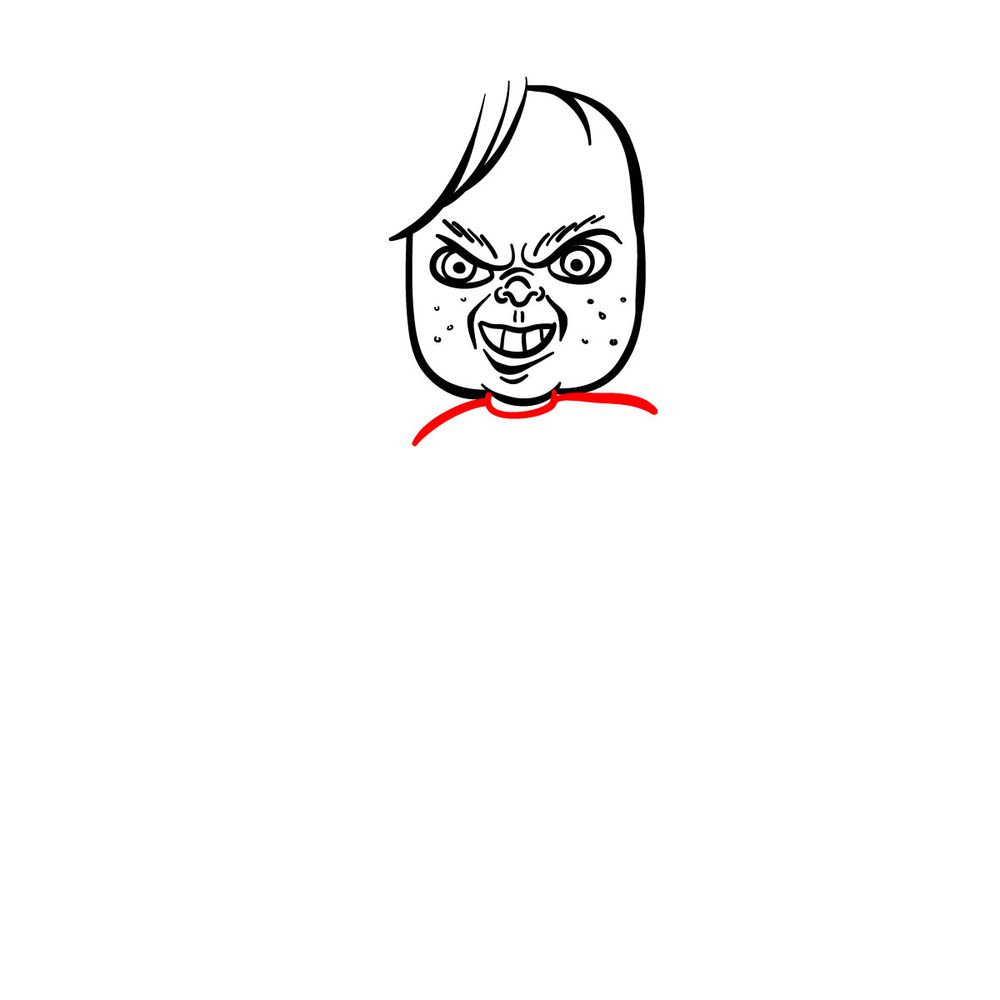
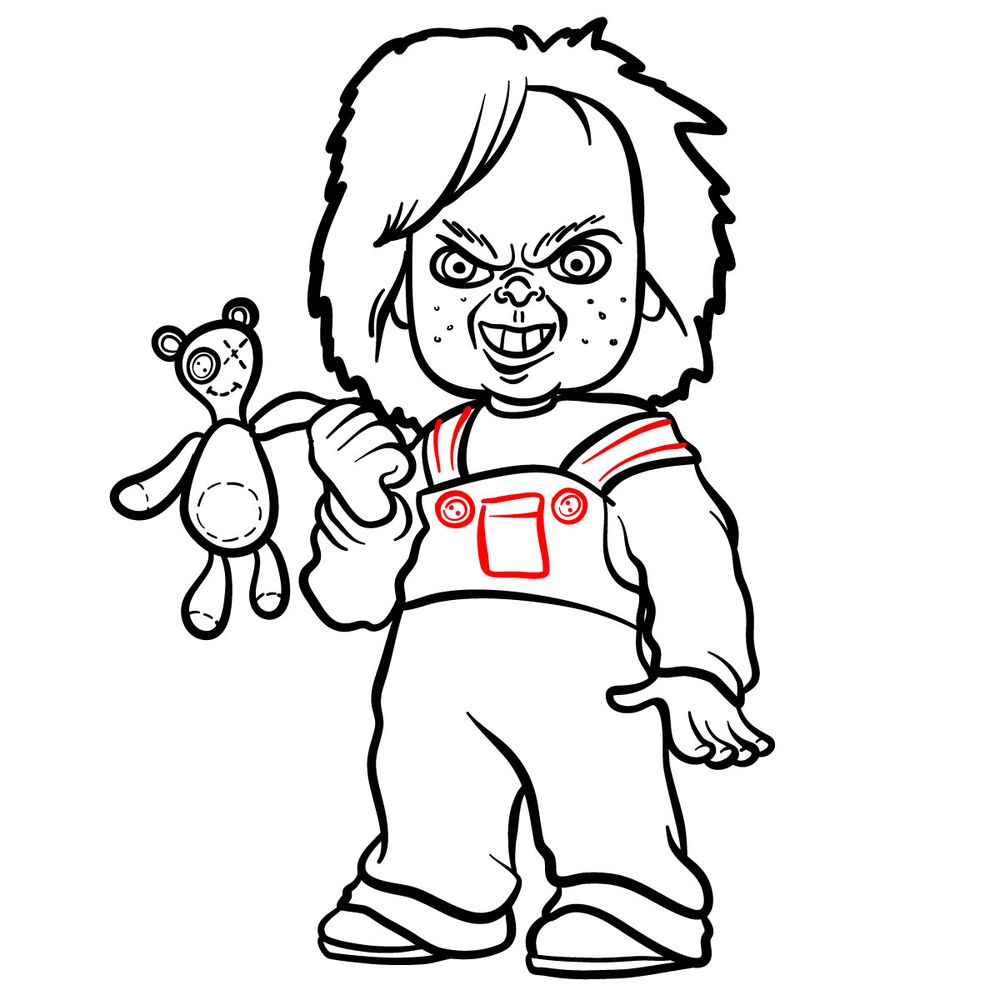
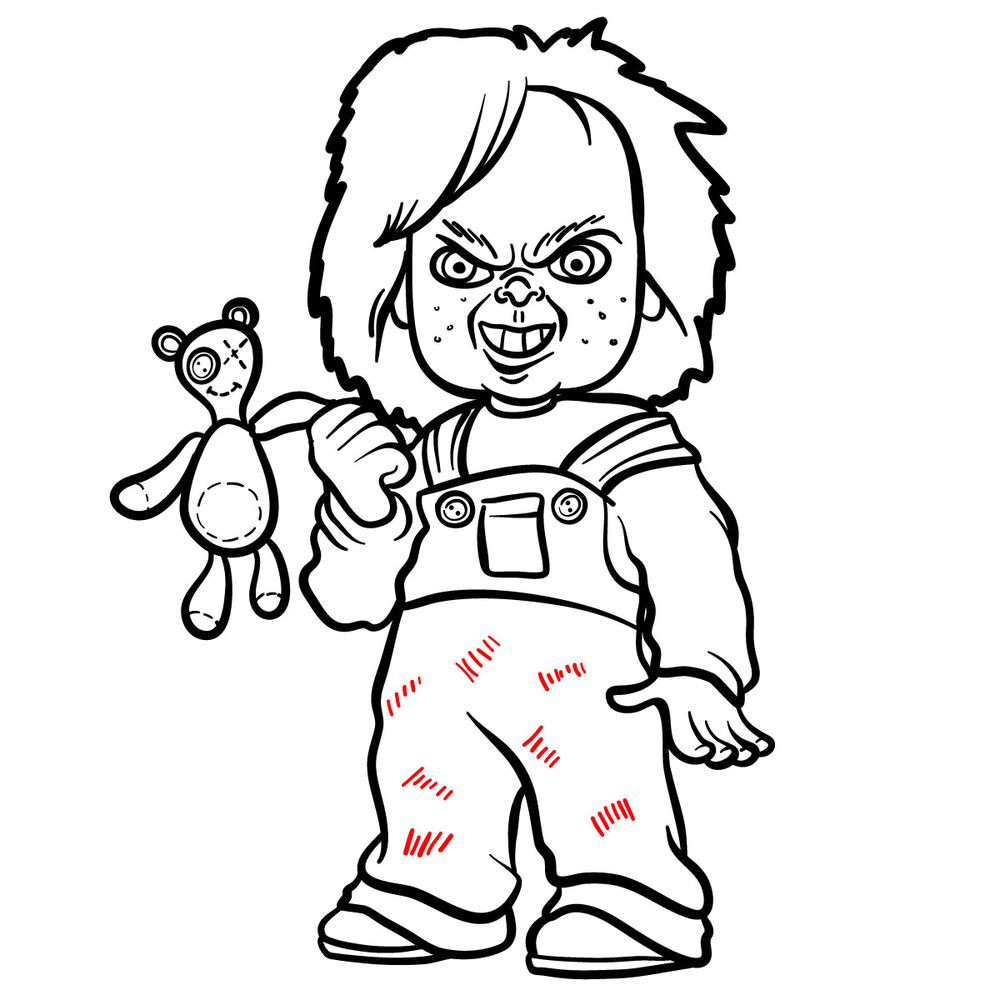
- Outfit Details: Remembering to capture the intricacies of his outfit will make your sketch more authentic.
Other characters like Ghostface or Pennywise can also be drawn alongside Chucky, enhancing the entire horror ambiance of your artwork.
Advice for Sketching Chucky
When bringing Chucky to life on paper, here are some pro-tips to bear in mind:
- Work on refining Chucky’s facial details, especially the smile. It’s the focal point of his character.
- Keep your strokes light, especially in the early stages. This makes refining and adjustments easier.
- Use references if needed. They can be instrumental in getting intricate details right.
About This Drawing Guide
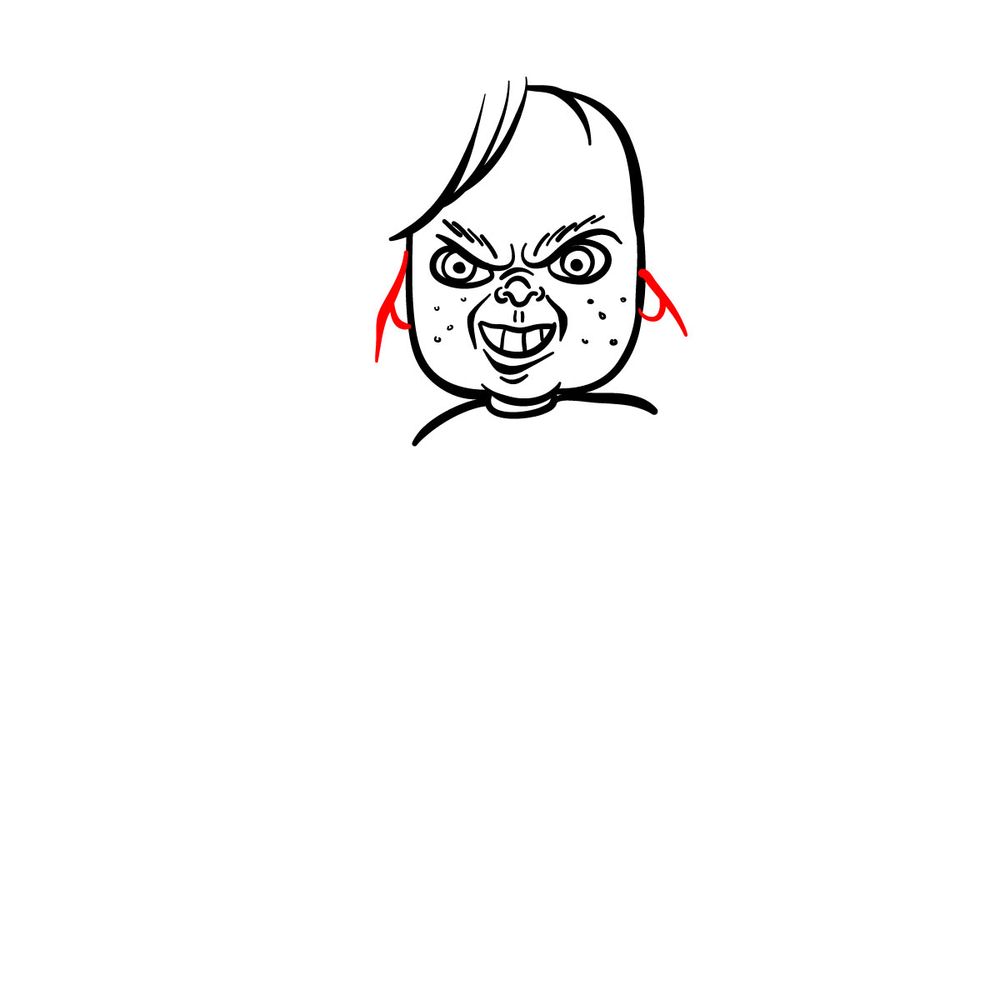
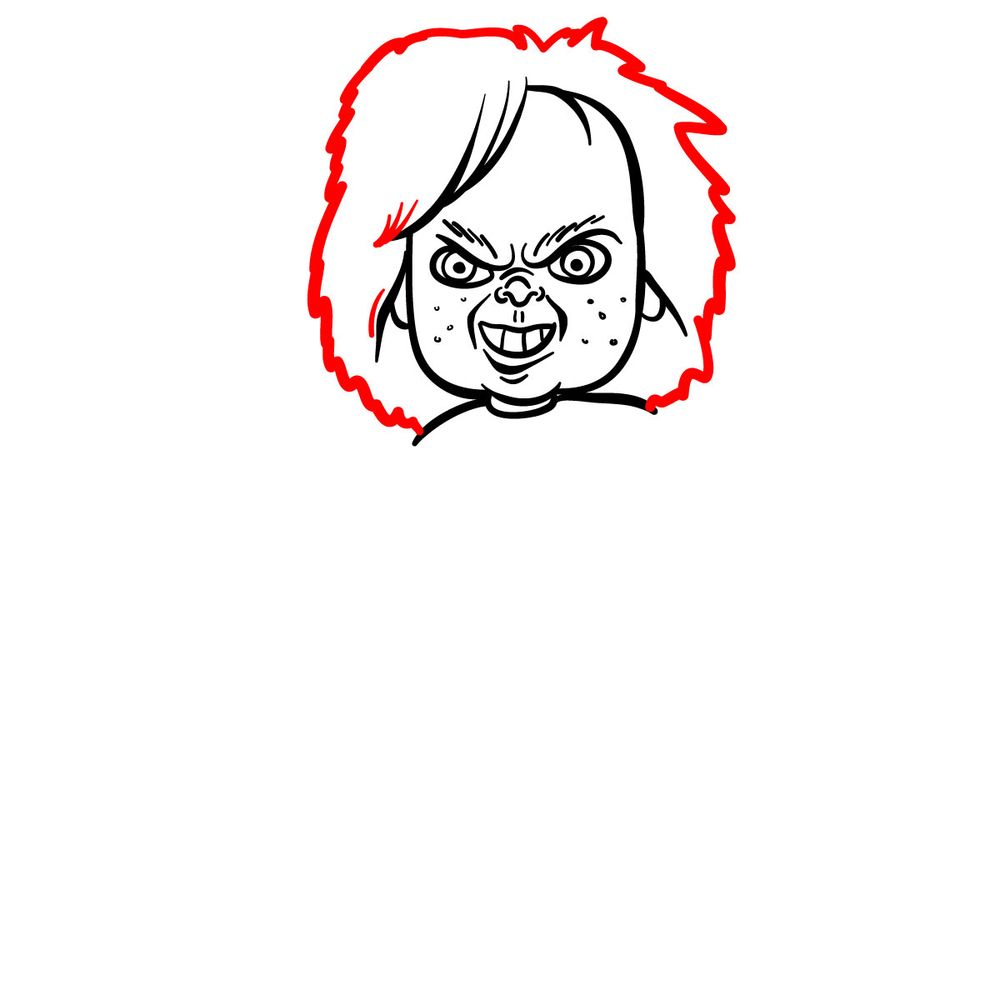
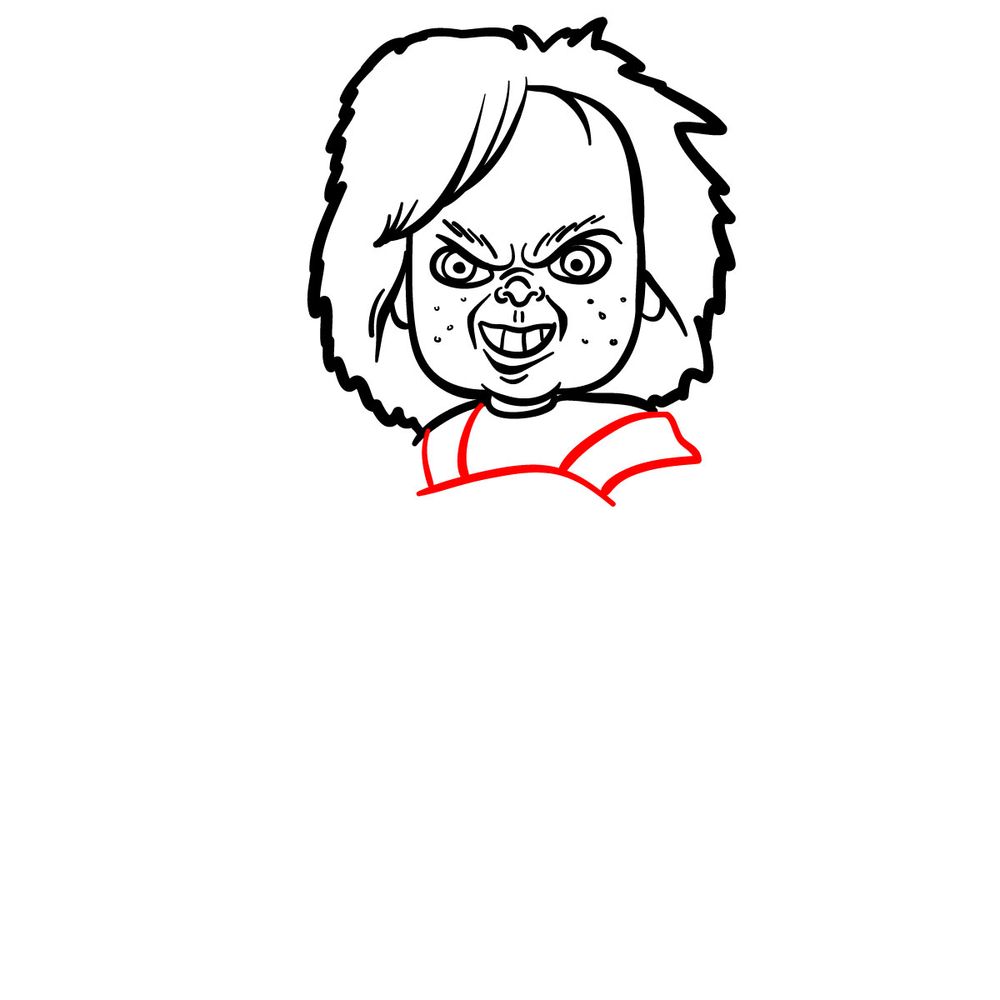
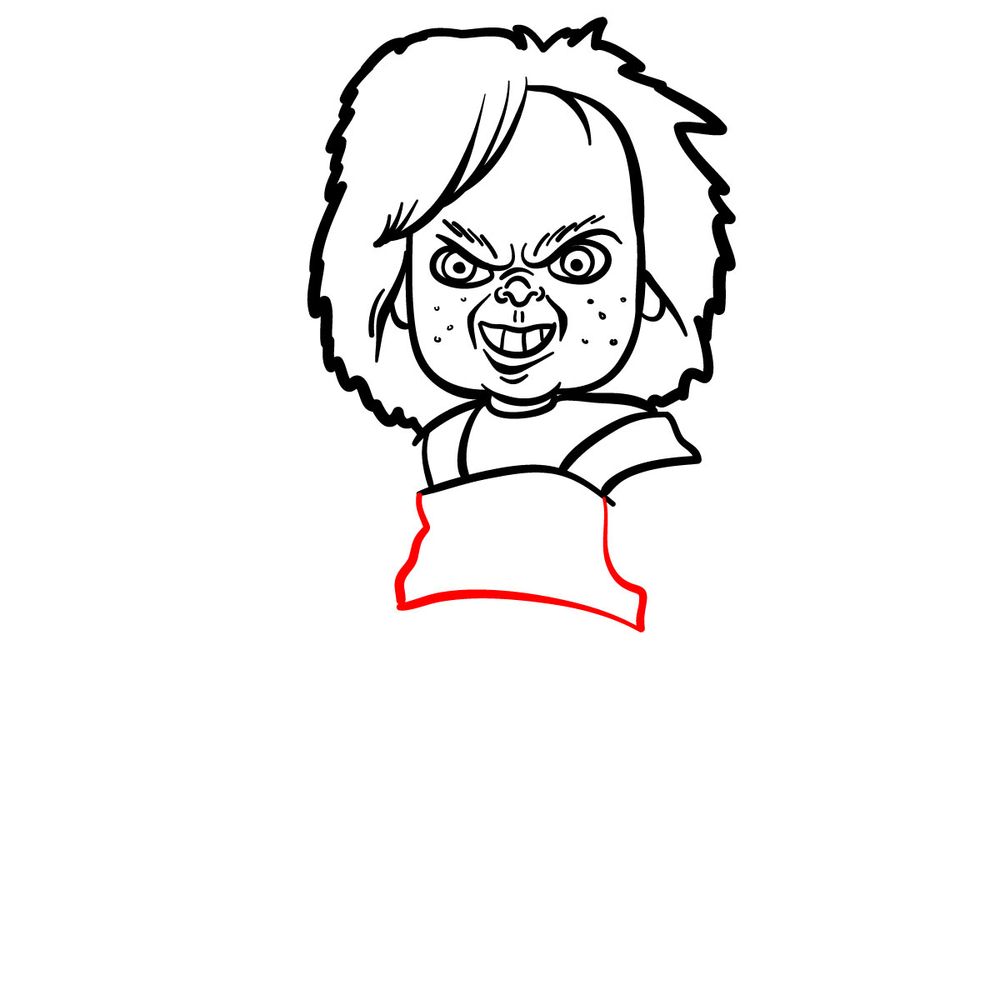
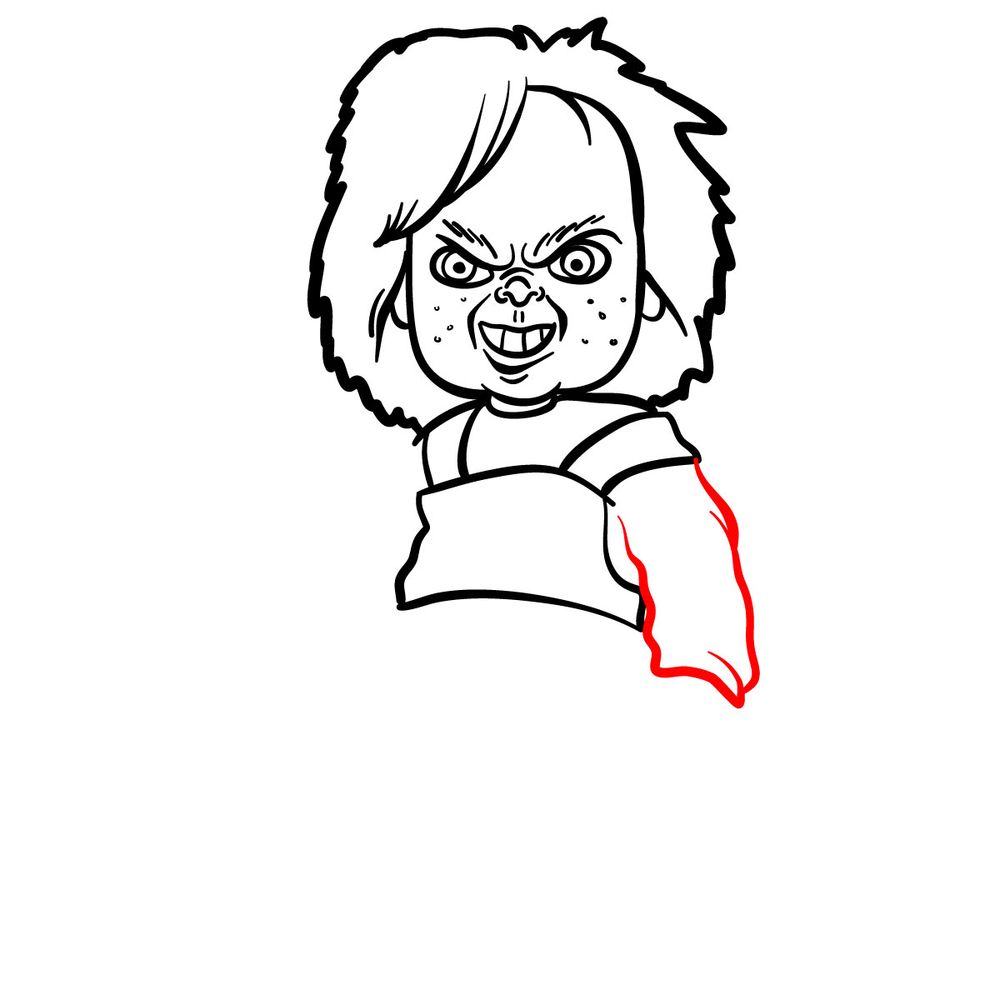
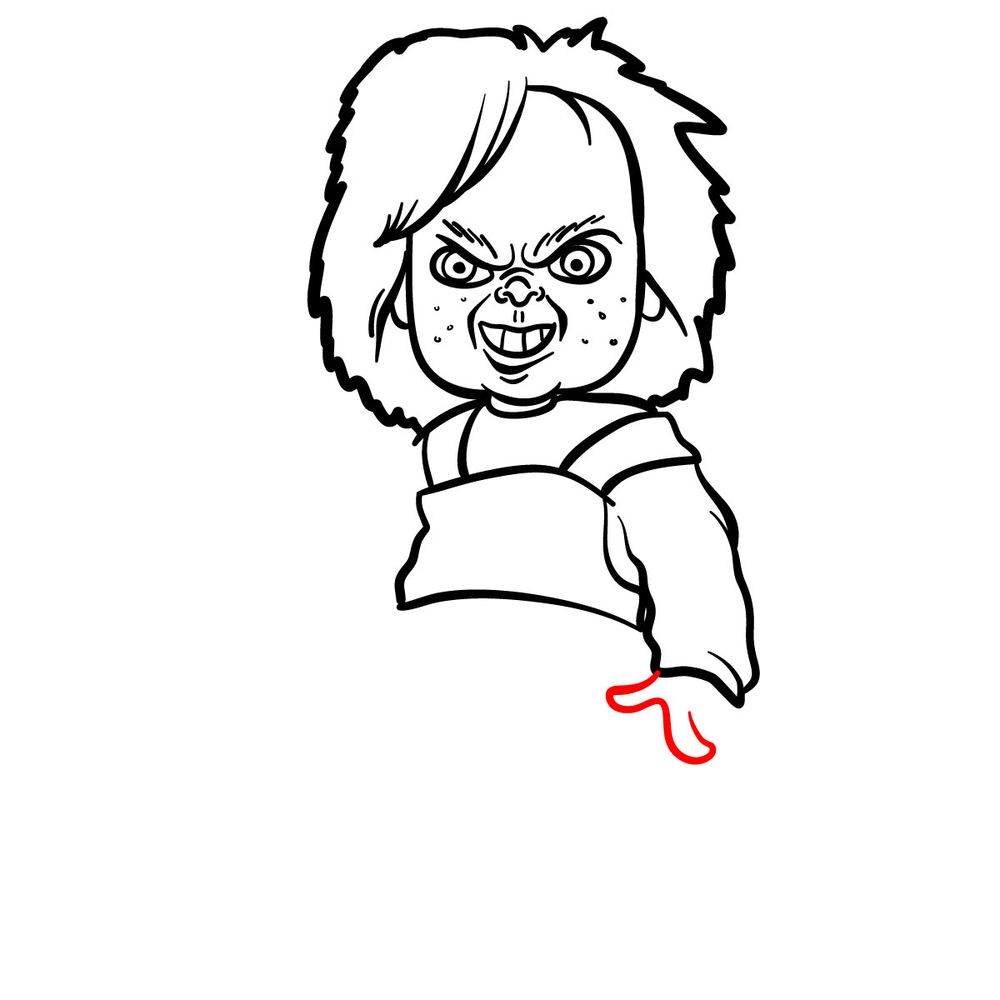
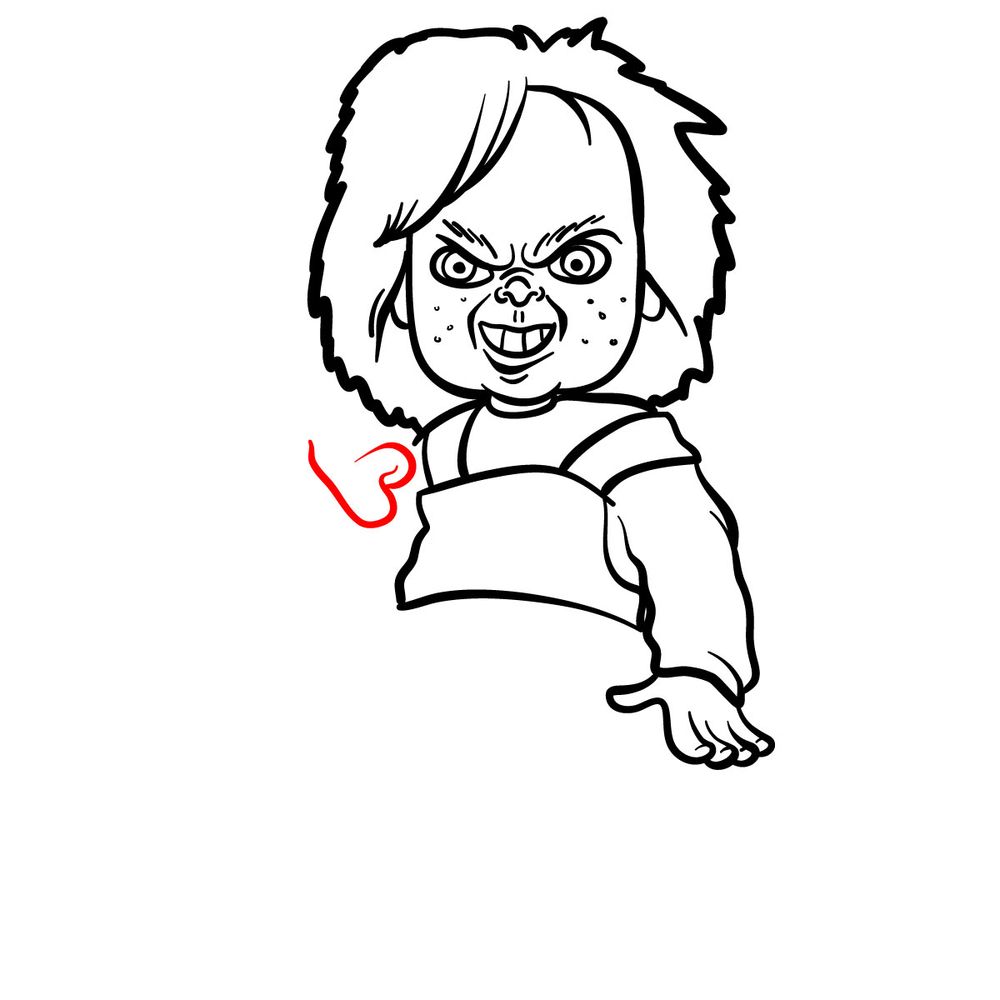
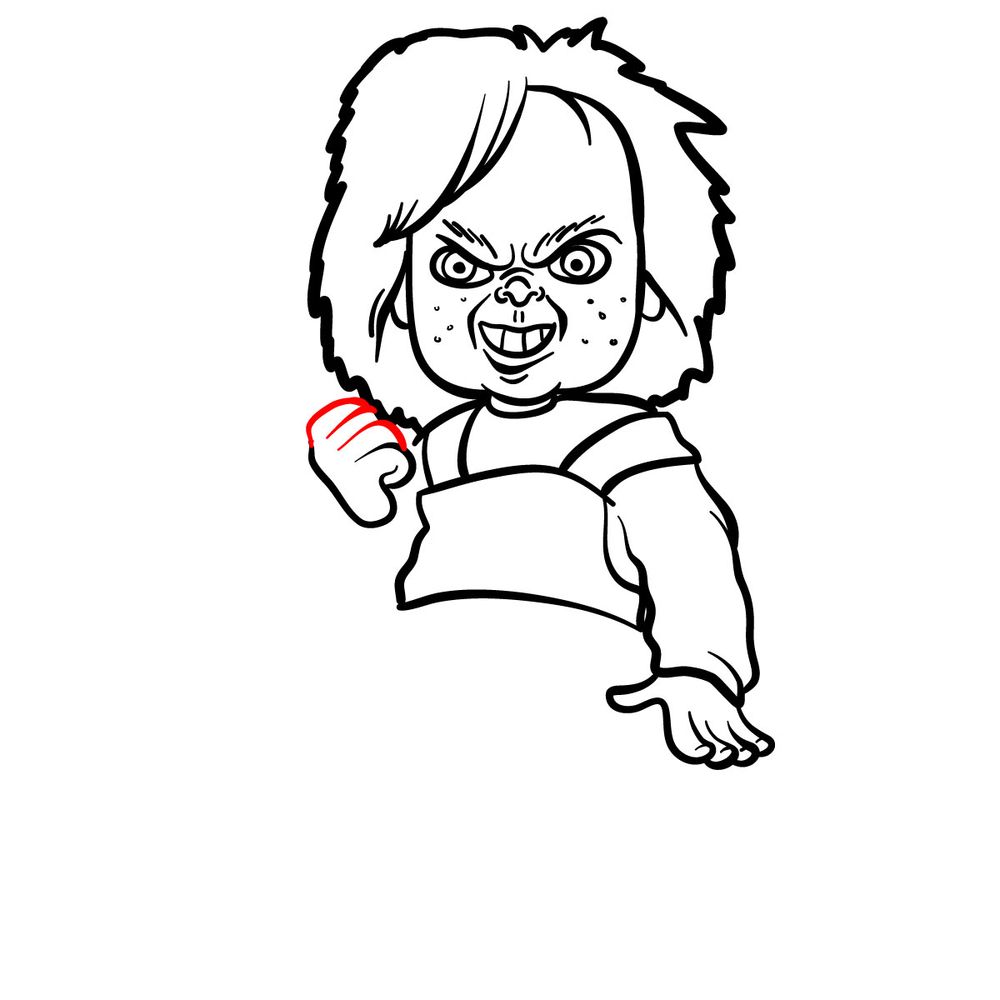
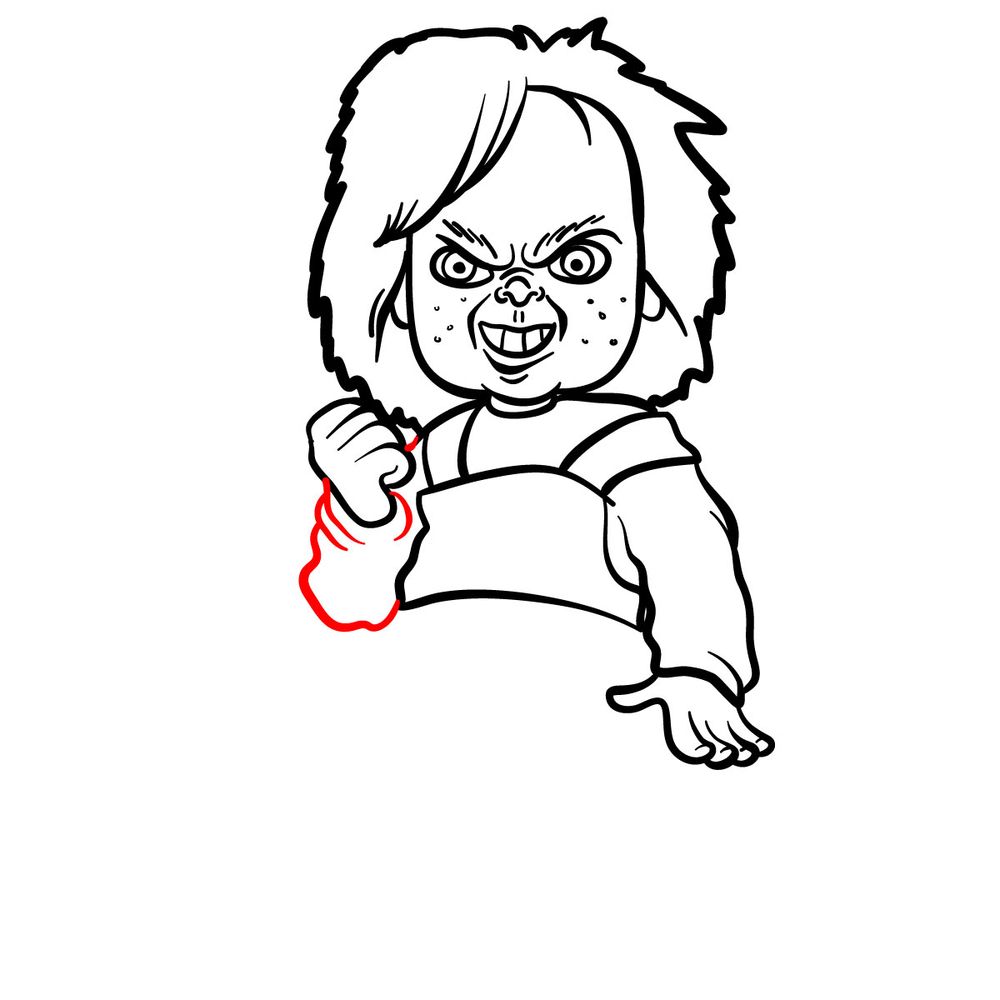
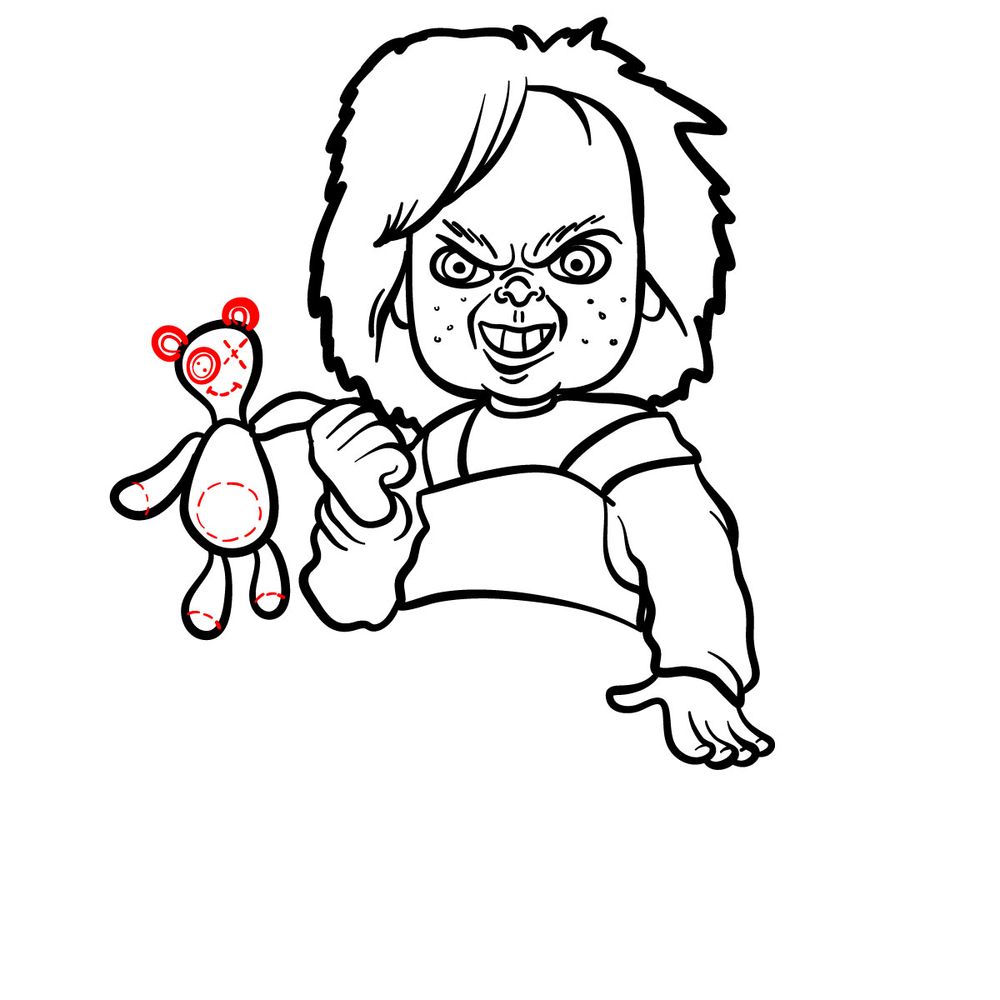
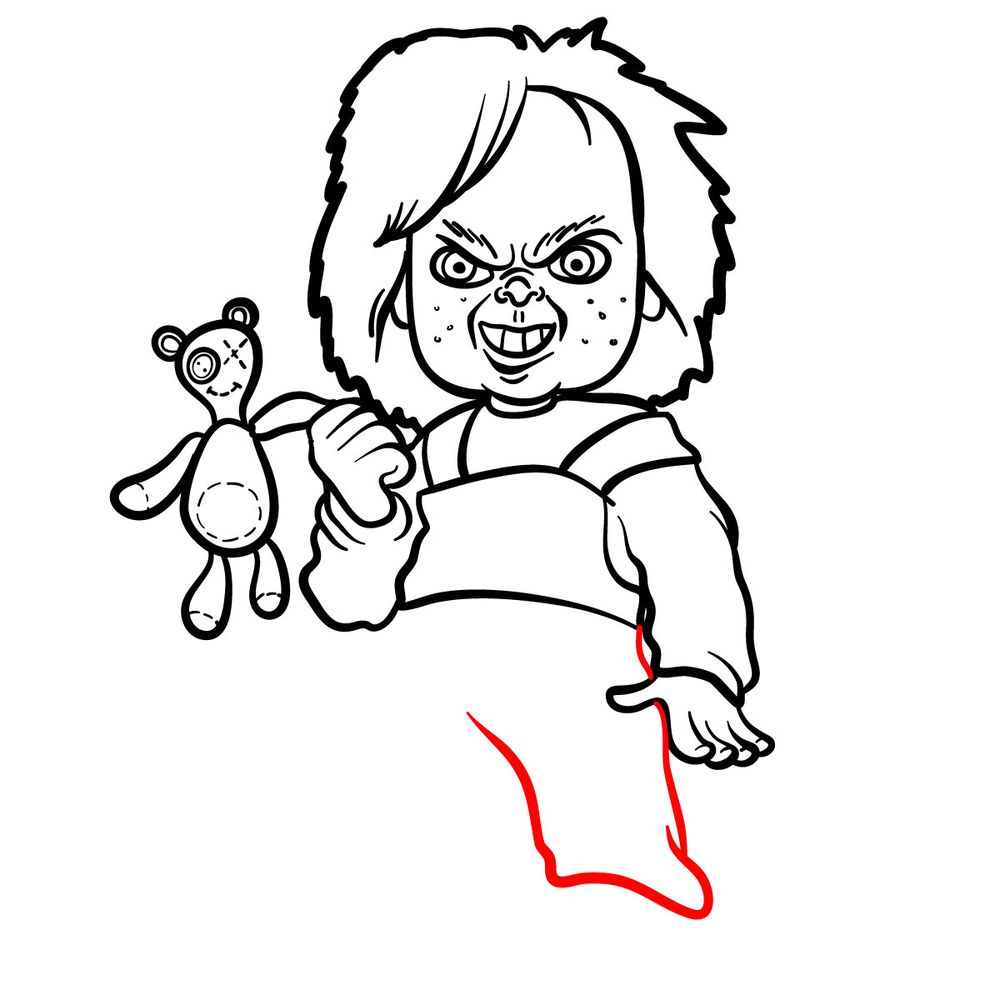
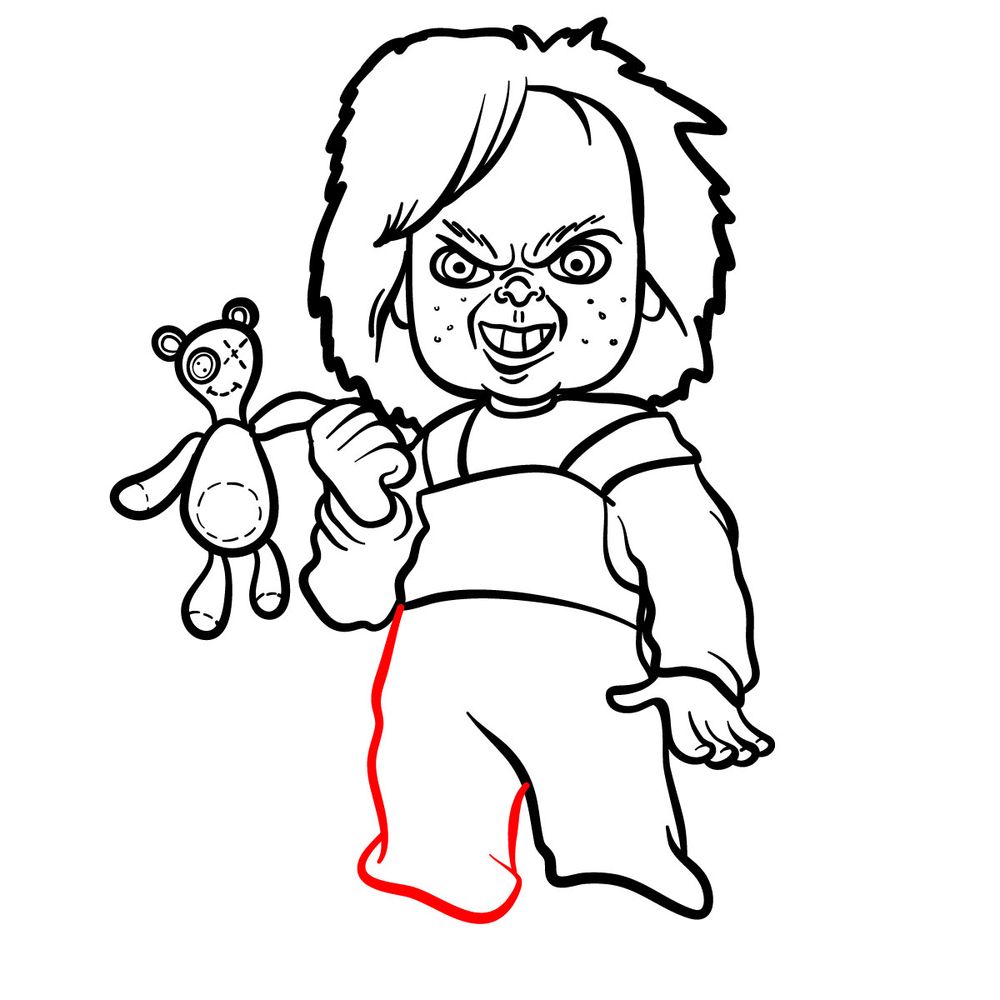
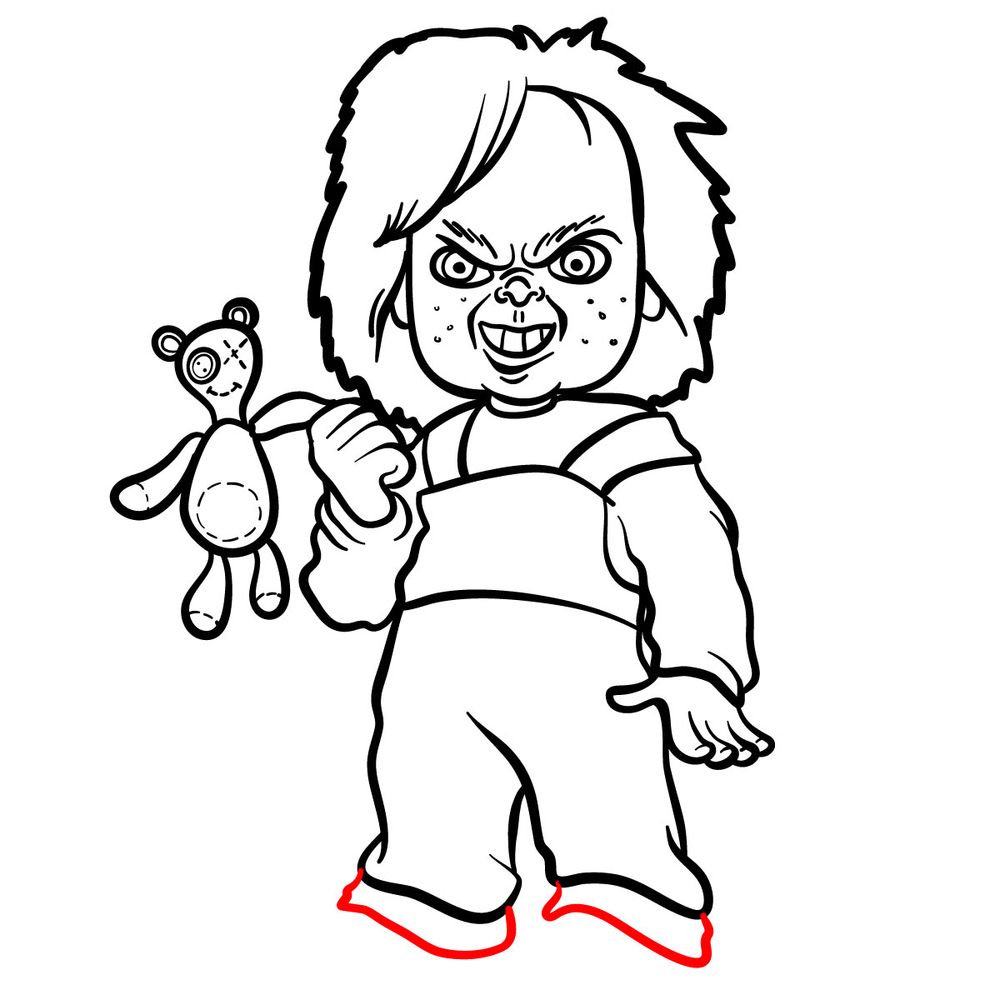
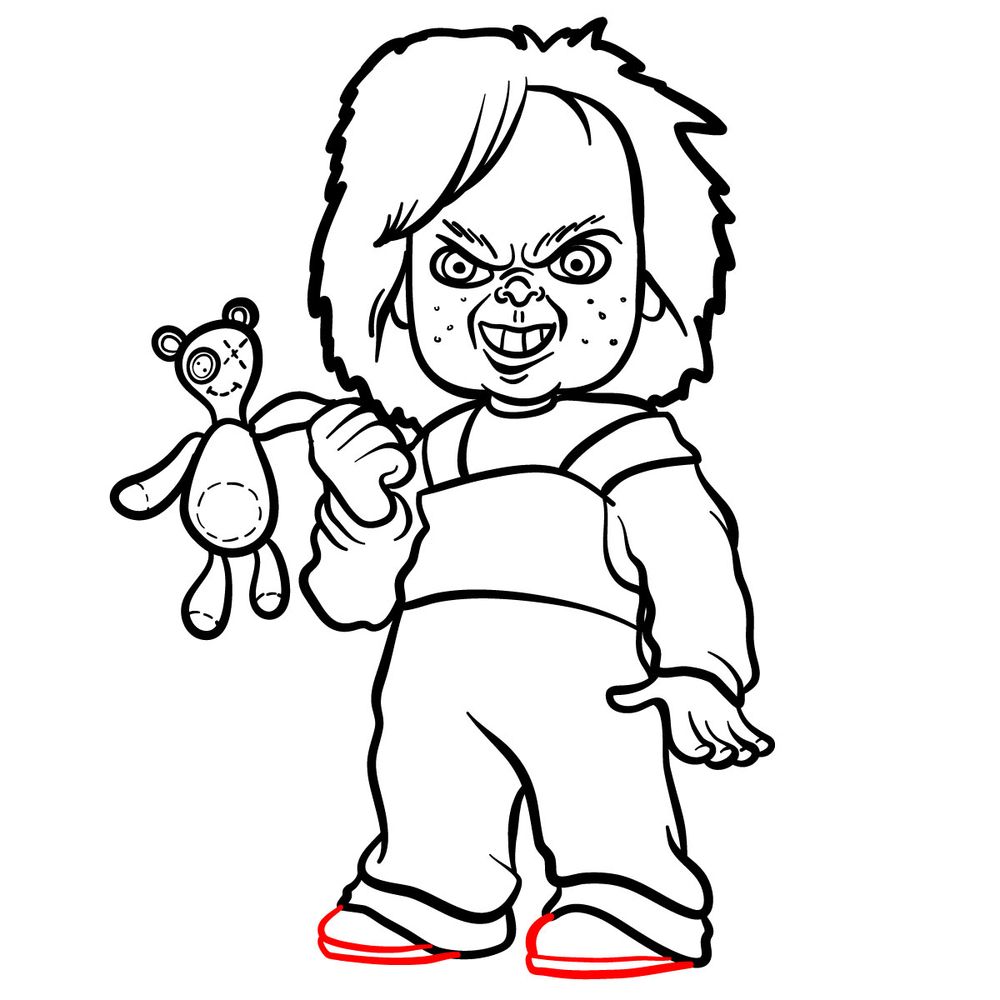
In this guide, you’ll embark on a 29-step journey to sketching Chucky. Let’s break down the color-coding guidelines:
- Red Color: Represents the current step, directing your focus.
- Black Color: Highlights the lines from previous steps.
Once you reach the final steps, you have the option to ink the sketch. When inking, ensure you use steady strokes. After inking, wait for the ink to completely dry to prevent smudging. Once dried, you can erase the initial pencil sketch, revealing a clean and polished artwork.

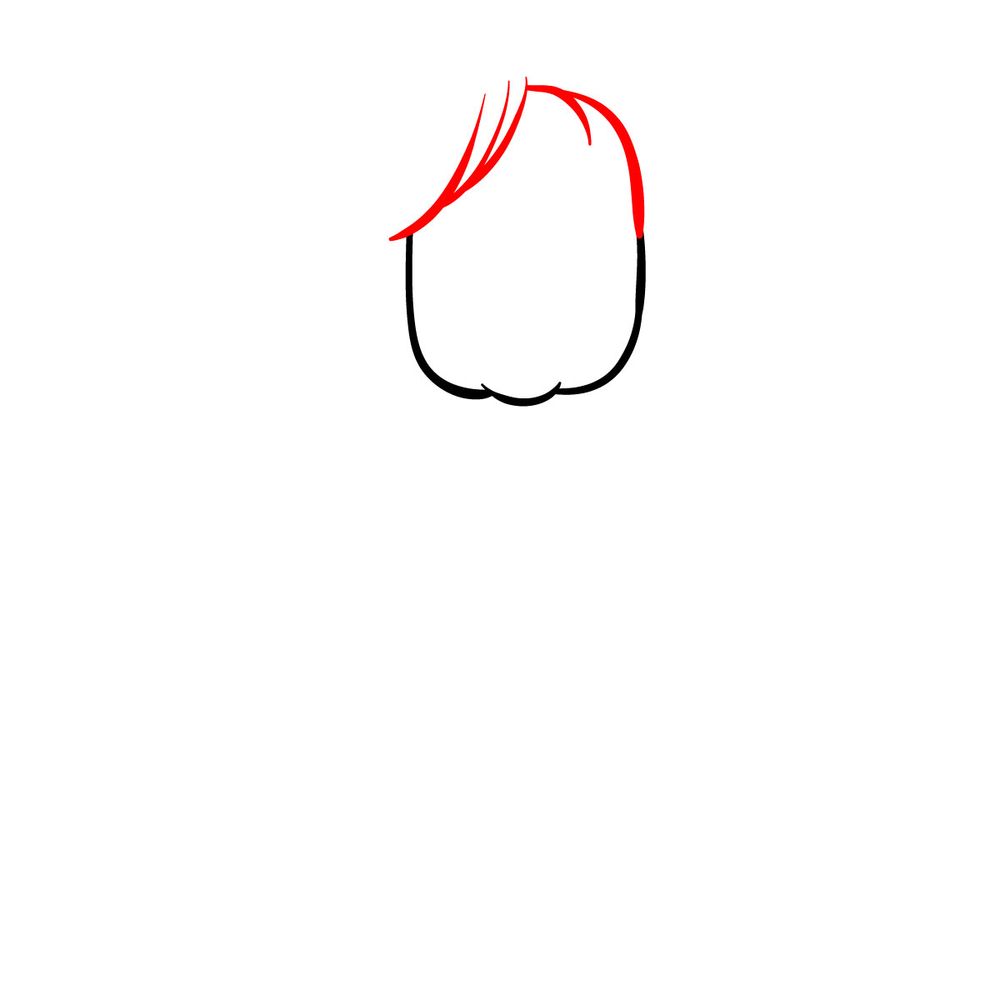
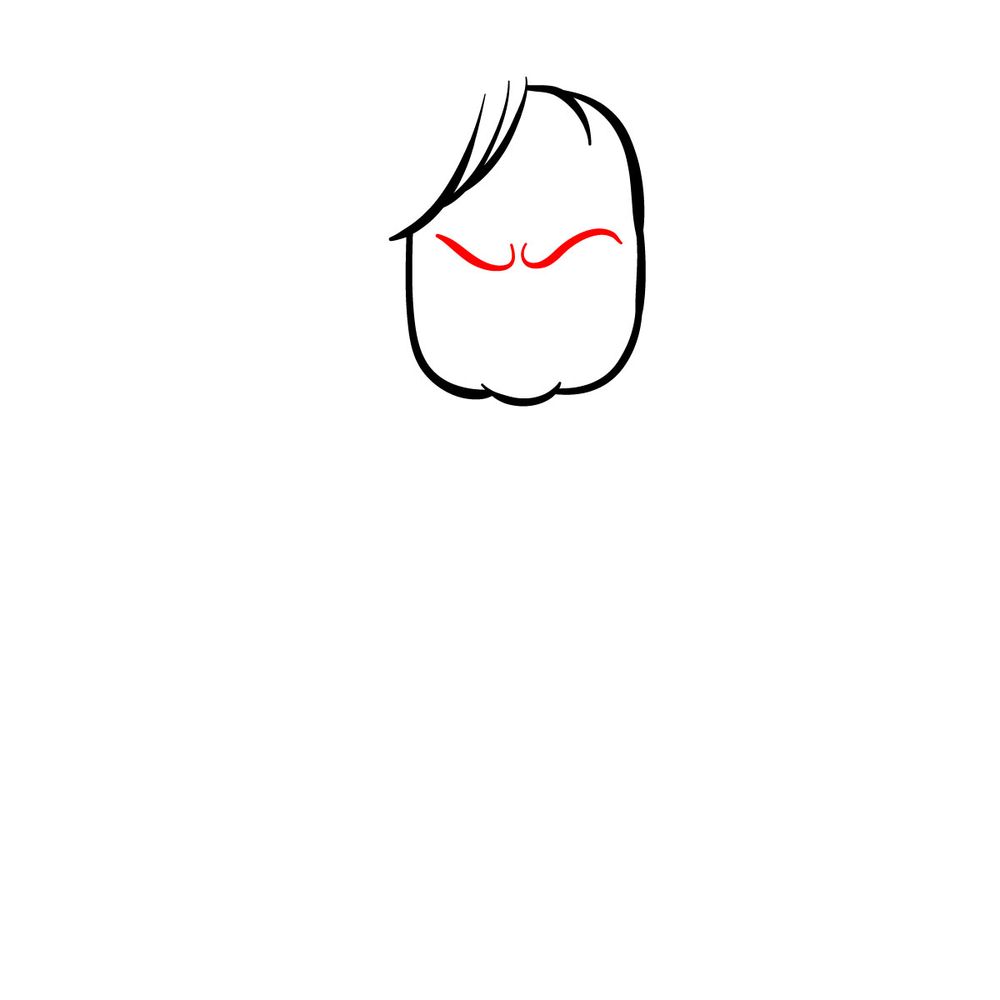


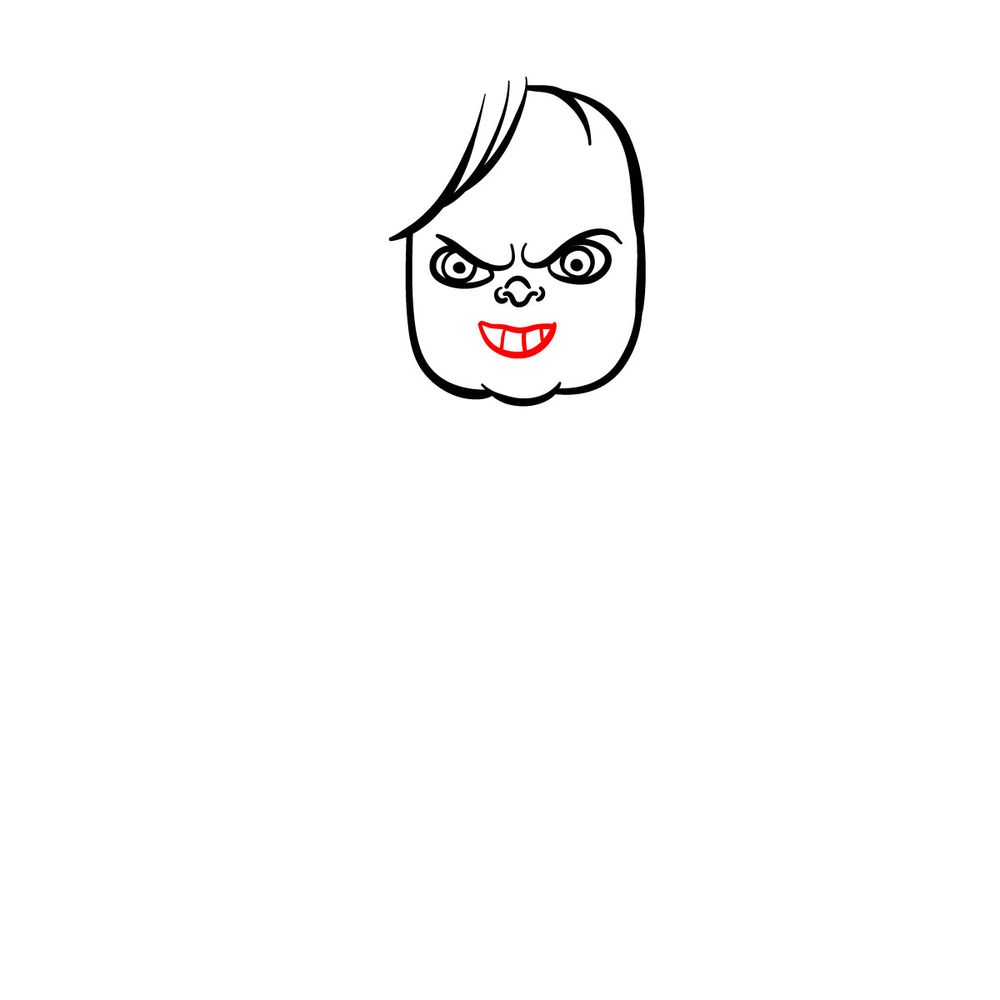
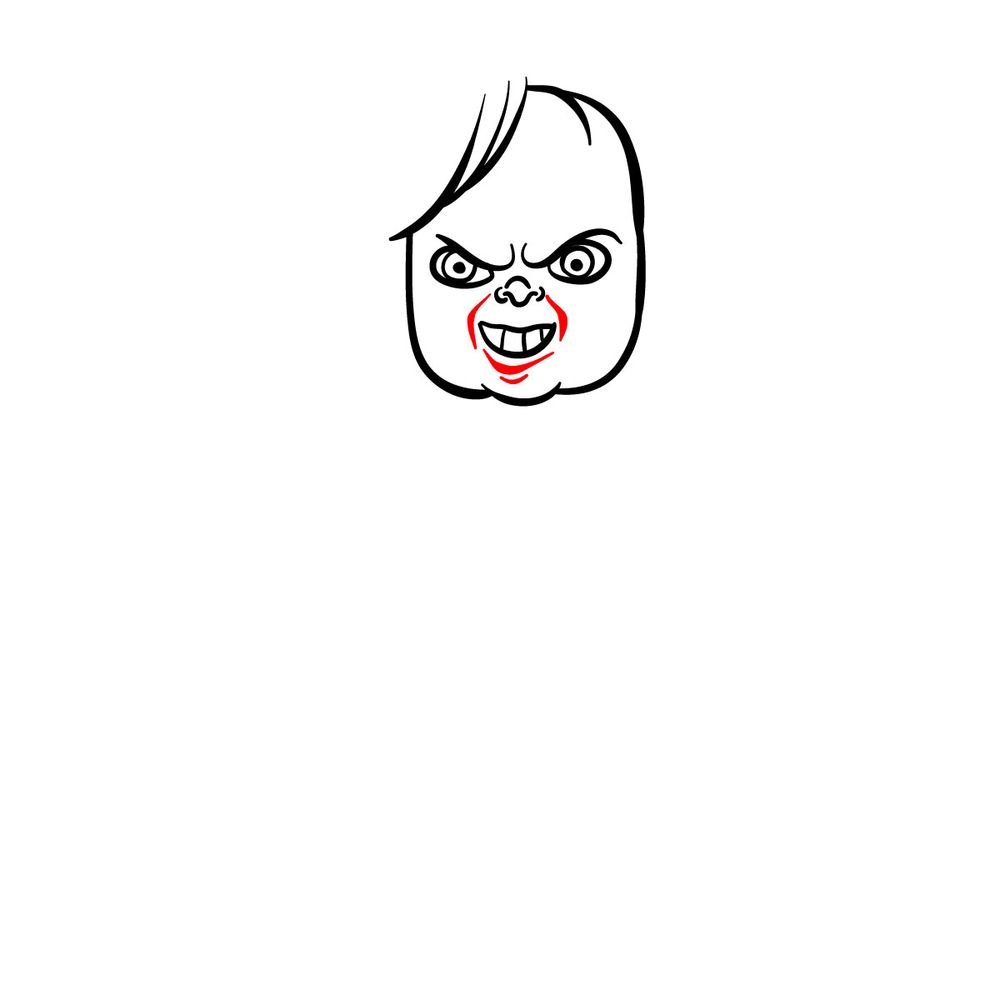


If your Chucky doesn’t look exactly like the reference, that’s completely fine, learning how to draw Chucky takes a few tries and the practice itself is what builds the skill. No two attempts look the same, and honestly that’s part of what makes it interesting. Feel free to drop your work-in-progress sketch in the comments on the pinned Pinterest post, it’s a good spot to share where you’re at and see what others are working on too.
Chucky is so good So going to do a halloween decoration with it