Last Updated on April 19, 2026
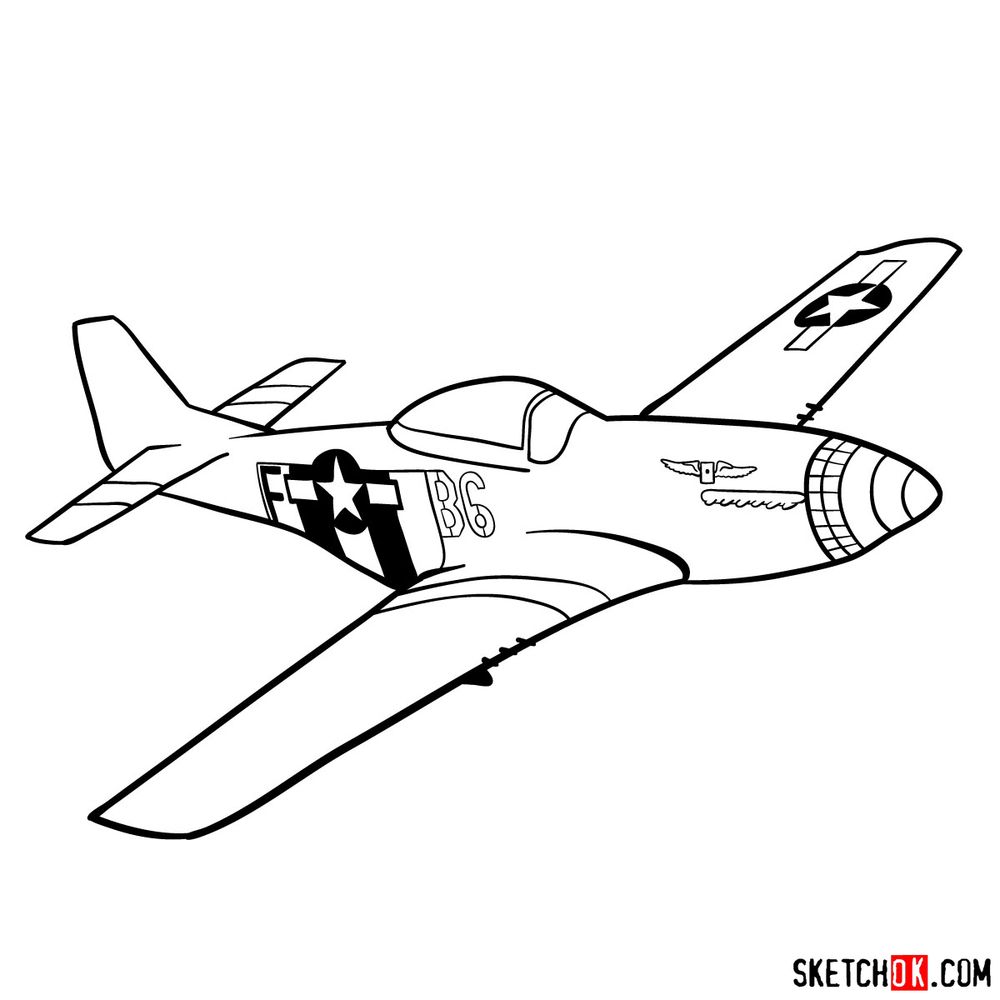
Capturing a three-quarter view of a propeller-driven fighter with accurate proportions is the skill at the center of this guide, and the North American P-51 Mustang is the subject putting that skill to work. The step-by-step breakdown here joins a growing set of Jets and Planes tutorials covering everything from WWII warbirds to modern airliners, and this one focuses specifically on how to draw the North American P-51 Mustang in line art form.
What the 16 Steps Actually Build
The tutorial runs through 16 steps and produces clean line art rather than a colored result, so the entire focus stays on shape accuracy and linework. The three-quarter view angle is the main challenge here because it requires the fuselage, wing sweep, and tail surfaces to read correctly in perspective at the same time. The engine cowling at the nose and the bubble canopy add detail work near the middle of the walkthrough, and the USAAF markings on the fuselage and tail surfaces fill out the final steps.
Key Visual Features of the P-51 Mustang
- Sleek single-engine WWII fighter body
- Bubble canopy cockpit on fuselage
- Star and bar markings on fuselage and wing
- Code letters F-T and B6 on fuselage
- Gridded engine cowling at nose front
If propeller-era fighters are your focus, the F6F-5 Hellcat covers another WWII naval fighter with similar construction logic. For something with a more complex jet silhouette, the McDonnell Douglas F-4 Phantom II walkthrough is worth trying next, and the Boeing 767 sketch shifts the challenge toward wide-body proportions.
How the Step Colors Work in This Tutorial
Each step uses a three-color system to make progress easy to follow:
- Red Color: lines added in the current step.
- Black Color: lines completed earlier.
- Gray Color: base sketch for structure.
How to Draw North American P-51 Mustang: Step-by-Step Tutorial


Post Your Finished Mustang and Keep the Hangar Growing
Once the line art is done, drop your finished drawing in the comments below. It’s useful to see how different artists handle the three-quarter perspective, and the feedback helps newer artists figure out where to spend more time. New tutorials go up on Facebook and Telegram as soon as they publish, a new YouTube walkthrough based on existing guides goes live every day, and Pinterest stays updated regularly too. If you want to keep building out your aircraft sketch collection, the Lockheed Martin F-16 Fighting Falcon is a solid next step, and the Lockheed F-117 Nighthawk brings in a completely different angular geometry to practice. Supporting the project on Patreon helps keep new tutorials coming and gives you access to unique hand-drawn coloring pages that aren’t available anywhere else.

How to draw a P-47D Thunderbolt?
How to draw a Junker 87 Stuka dive bomber?
Sure. By the end of the week.