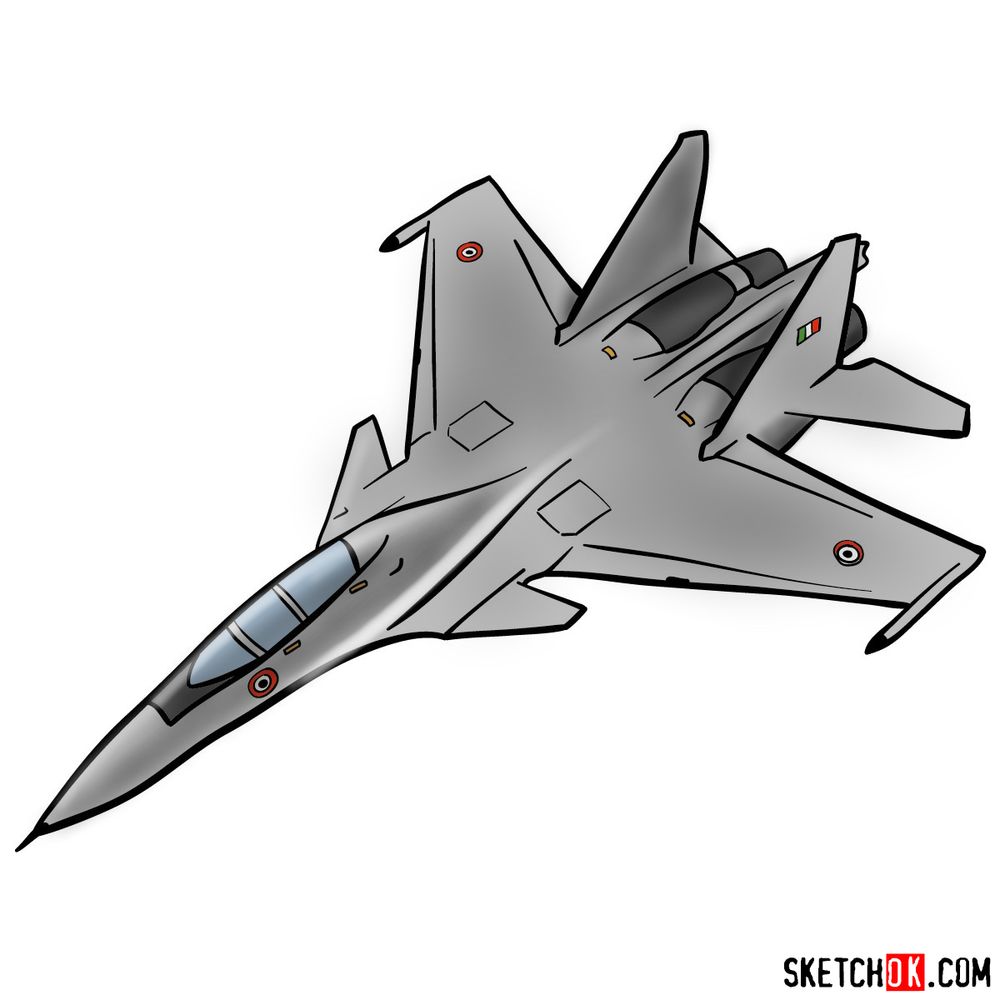
Among the Jets and Planes category guides on the site, the Su-30MKI stands out for carrying both Russian engineering and Indian Air Force markings in the same airframe, and this tutorial walks through how to draw Russian Jet Su-30MKI from the first construction line to the finished colored result.
What Makes This Jet a Worthwhile Drawing Challenge
The tutorial runs 14 steps and ends on a fully colored version, so both the linework phase and the color application phase are covered. The Su-30MKI is a full-side profile of the aircraft with canard forewings and swept-back delta wings, which means getting the proportions and angles of multiple wing surfaces lined up correctly is the core challenge here. The markings on the fuselage and wings add a second layer of detail that pays off once the color goes in.
Key Visual Features of the Su-30MKI
- Sleek twin-engine supersonic fighter body
- Light gray fuselage with dark outlines
- Dual tail fins with canard forewings
- Red roundel markings on wings and nose
- Indian tricolor flag insignia on fuselage
If you enjoy drawing aircraft with layered wing geometry, the Boeing 767 and the North American P-51 Mustang are solid follow-up sketches, and the P-40 Flying Tiger adds some practice with nose art and markings similar to what this jet carries.
Understanding the Step Color System
Each step in this tutorial uses a three-color coding system to make it clear exactly where to draw:
- Red Color: lines added in the current step.
- Black Color: lines completed earlier.
- Gray Color: base sketch for structure.
How to Draw Russian Jet Su-30MKI: Step-by-Step Tutorial


Share Your Su-30MKI Sketch When You Are Done
Once you finish the drawing, drop it in the comments below. It is always good to see how different artists handle the wing angles and the Indian Air Force markings. New tutorials get posted to Facebook and Telegram as soon as they go live, a new YouTube video based on existing guides goes up every day, and Pinterest stays updated regularly too. If you want more aircraft to sketch, the McDonnell Douglas F-4 Phantom II and the Lockheed Martin F-16 Fighting Falcon are both worth trying next. If you find these guides useful, consider supporting the project on Patreon, where hand-drawn coloring pages are available for supporters.