Last Updated on May 14, 2026
Queen Anna of Arendelle, a pivotal character from Disney’s animated marvel, “Frozen“, has captured hearts worldwide. As the younger sister of Elsa the Snow Queen, Anna’s journey from a loving sibling separated by a magical mishap to the determined young woman seeking to mend their bond has resonated with many. With her vivacious spirit, unwavering optimism, and undying love for Elsa, Anna embarks on a perilous adventure to save her kingdom. By the end of her saga, she rises to her rightful position as the Queen of Arendelle.
Key Features to Capture When Drawing Anna’s Face
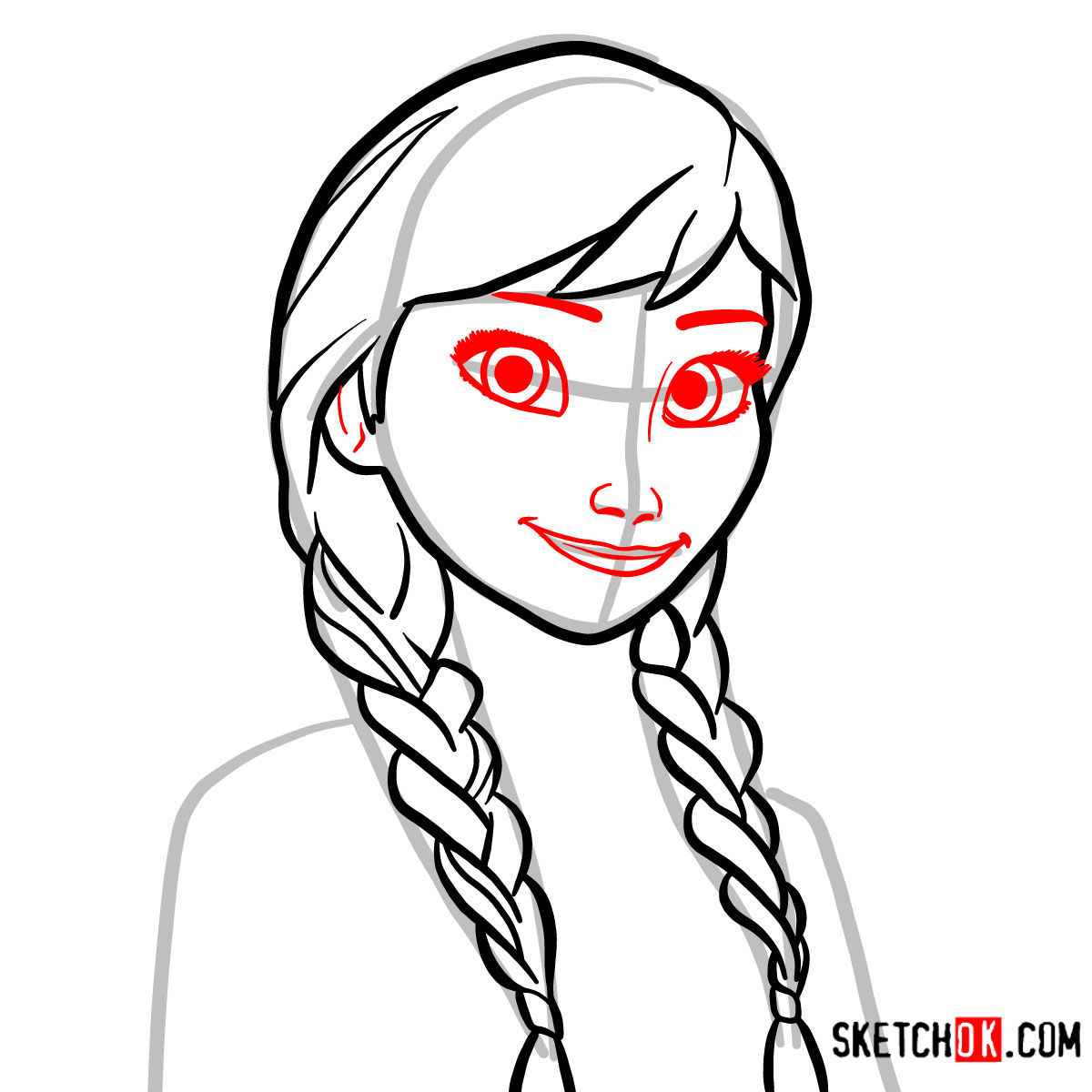
- Expressive Eyes: Anna’s turquoise-blue eyes are windows to her fearless soul and undying optimism.
- Strawberry-Blonde Hair: Often tied in two braided pigtails, Anna’s hair also boasts a unique platinum-blonde streak from her childhood encounter with Elsa’s magic.
- Regal Yet Relatable: As a princess turned queen, her facial features exude royalty while retaining a touch of relatability and innocence.
For those seeking to expand their artwork, Kristoff, makes for a magnificent companion piece, capturing the bond between two characters.
Understanding the Sketch Guide
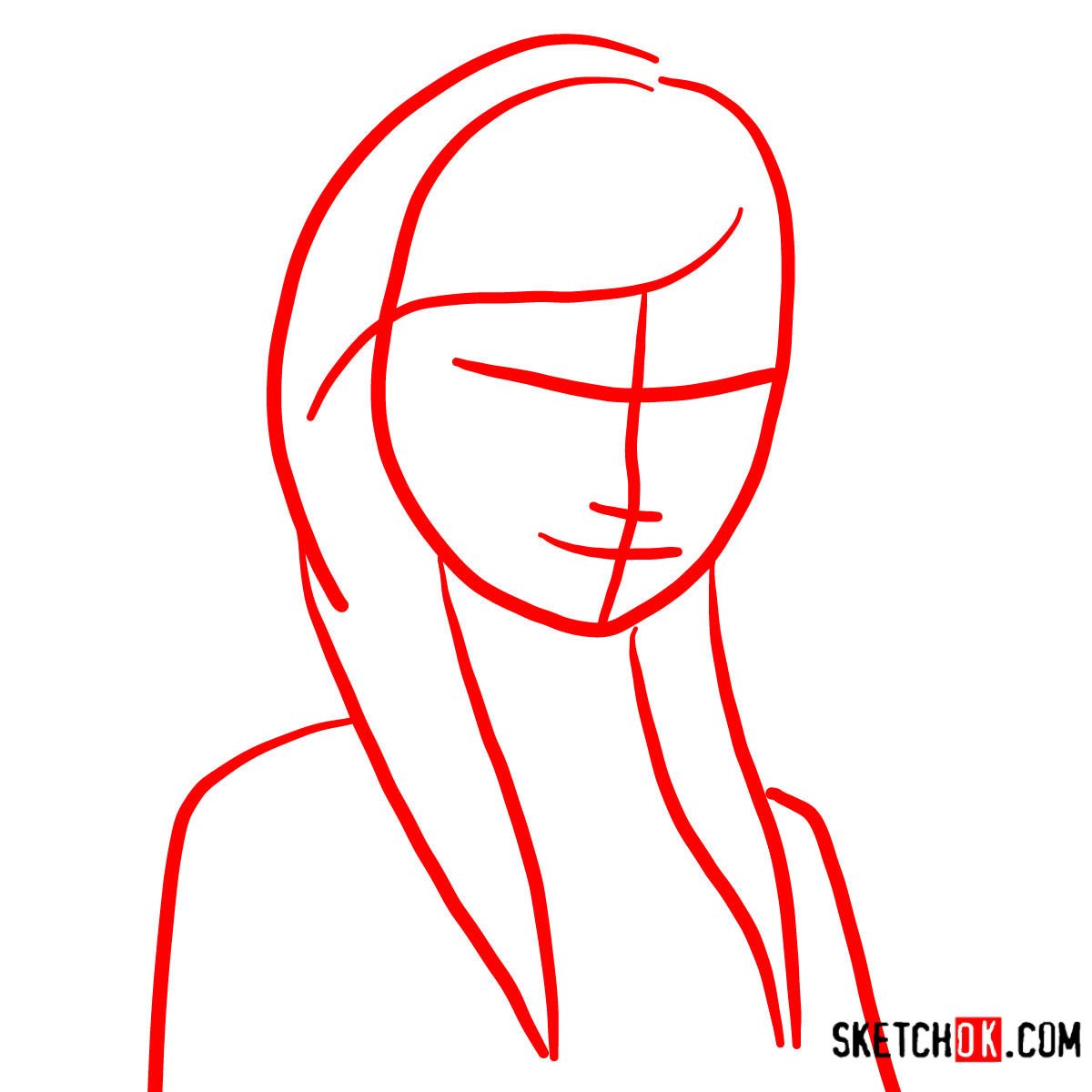
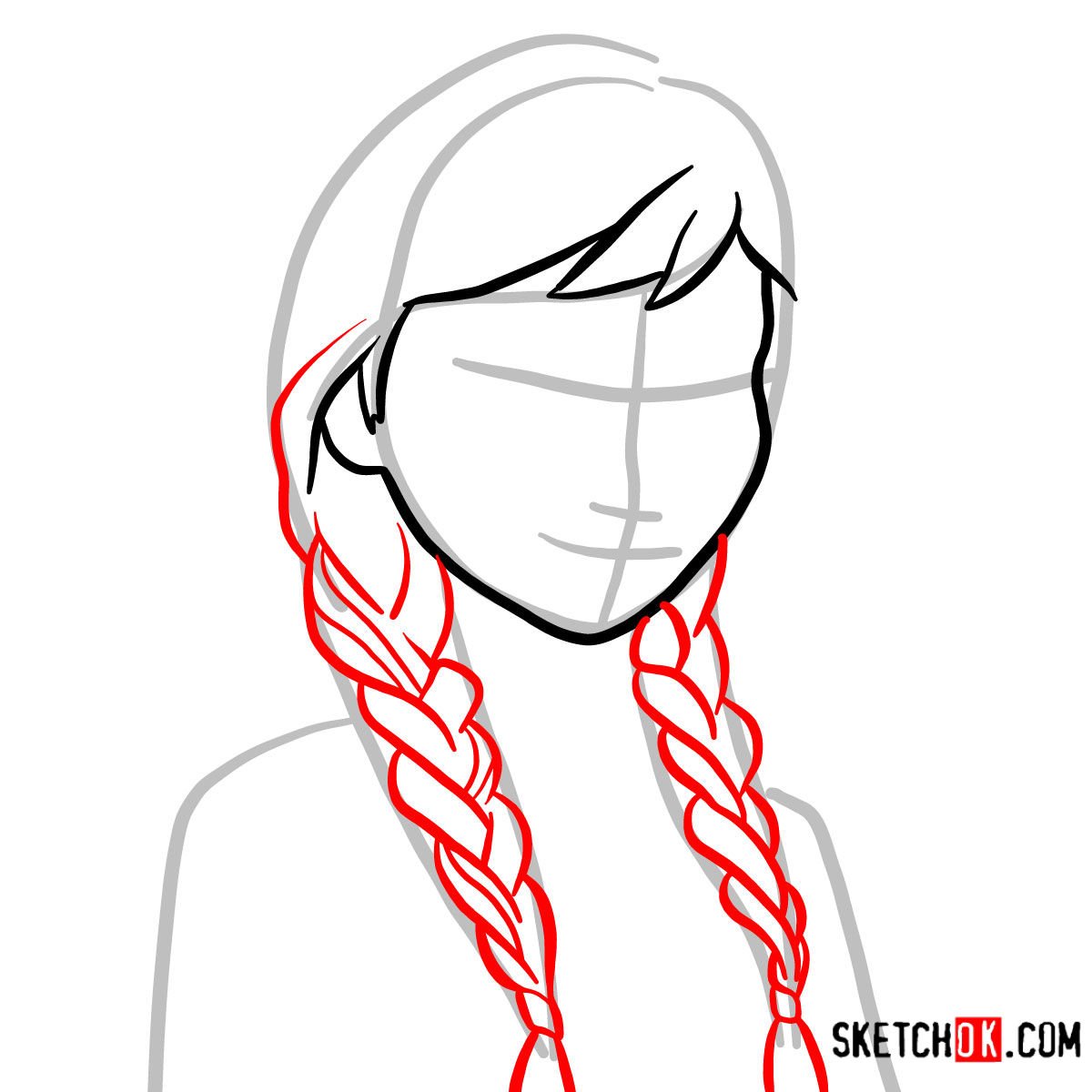
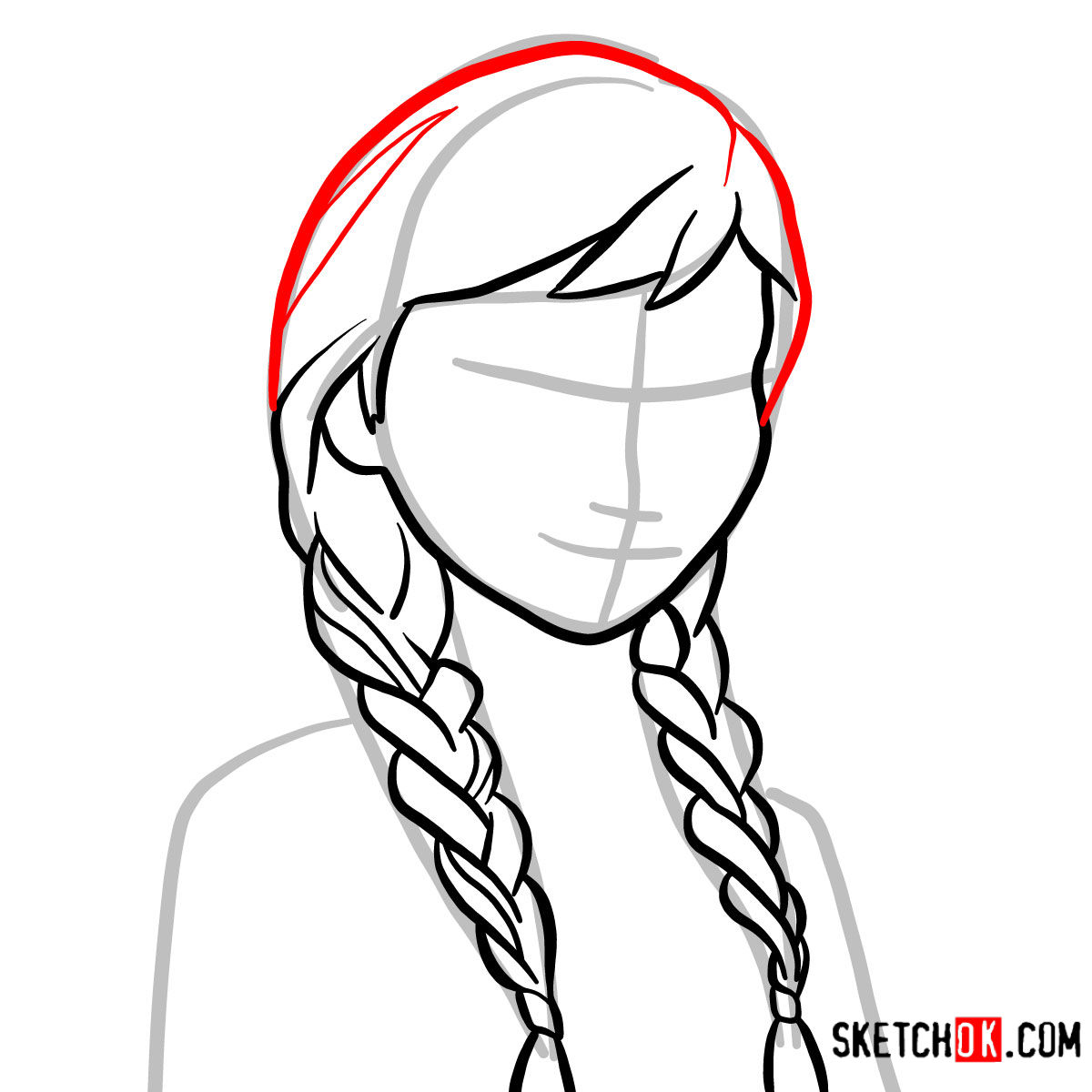
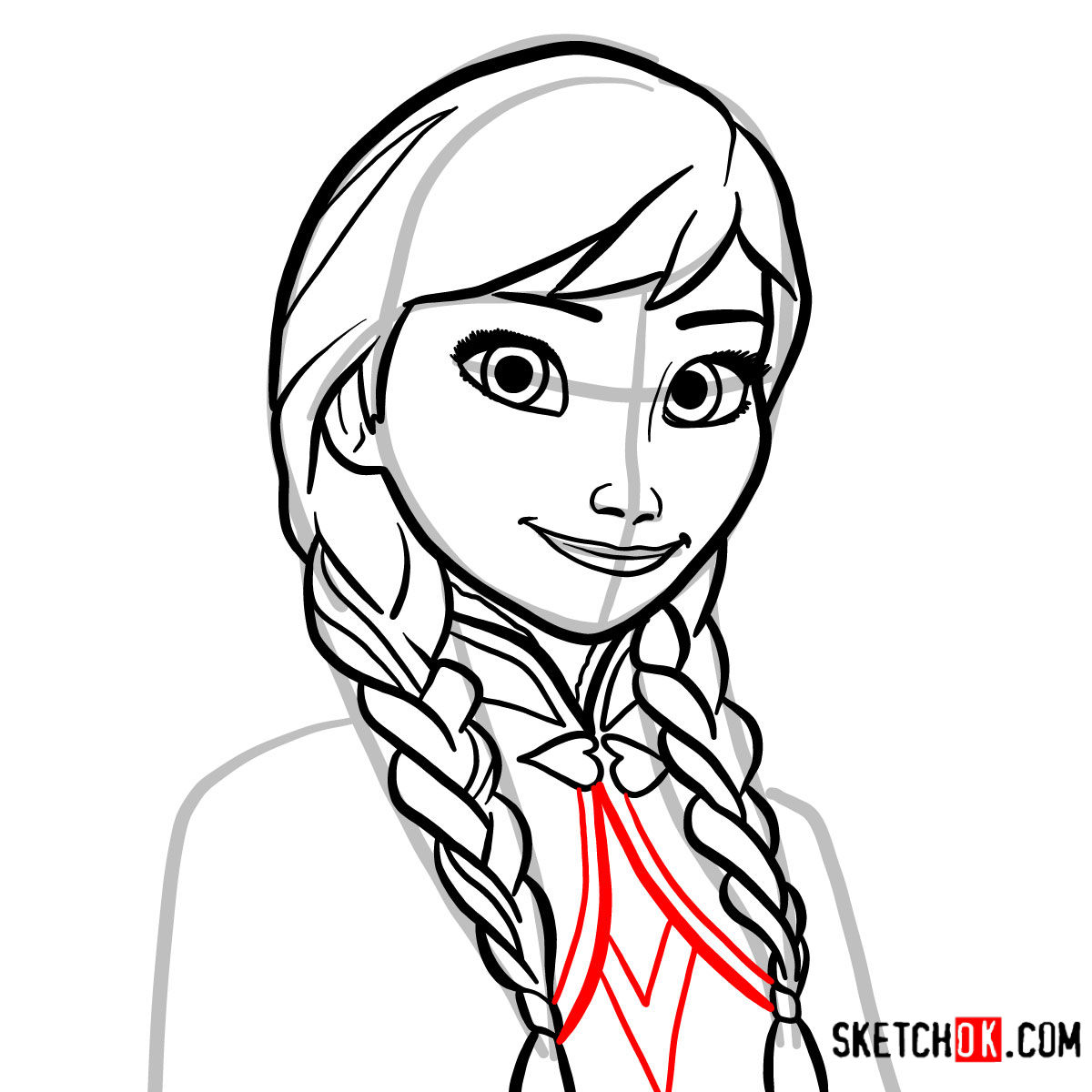
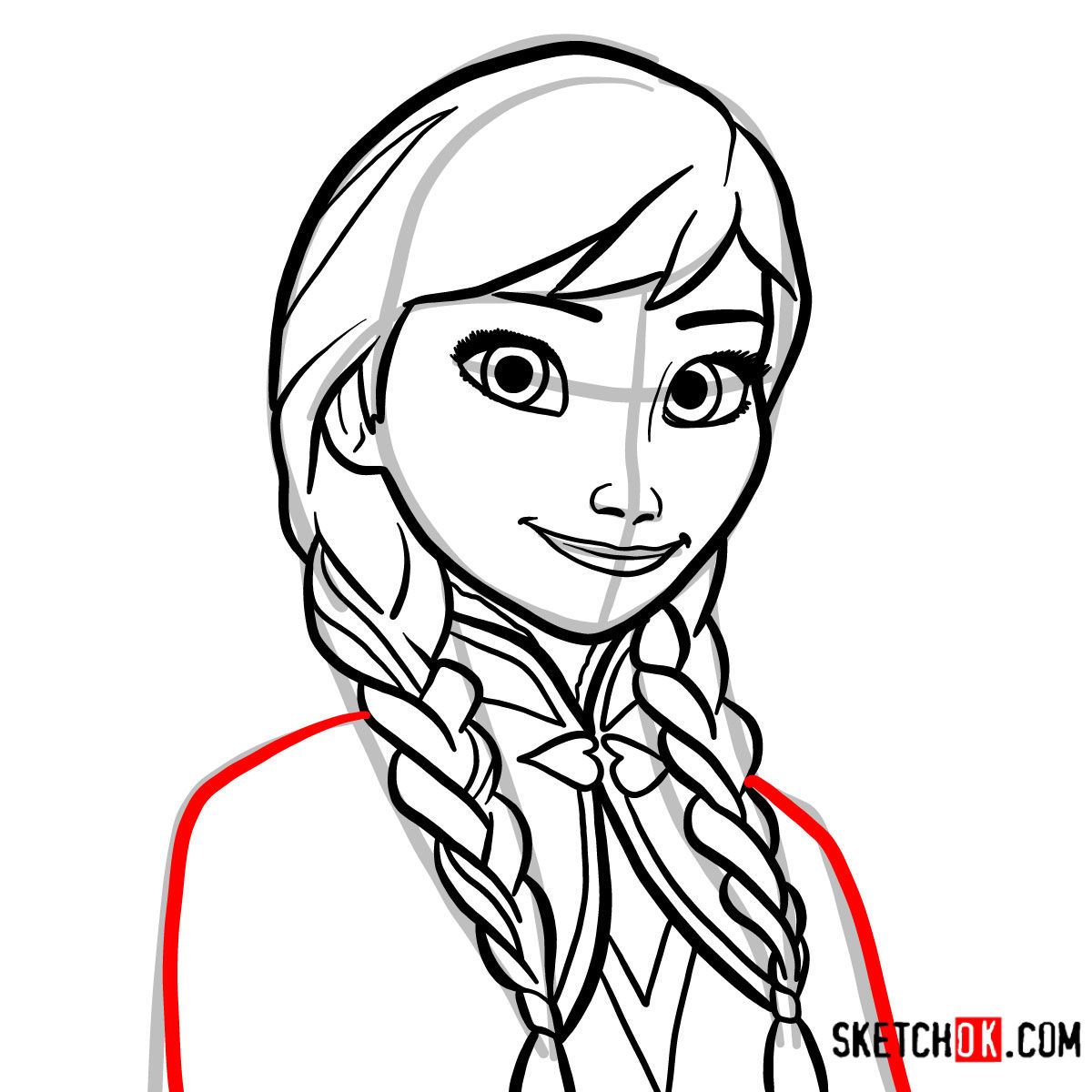
Our guide on how to draw Anna’s face consists of 9 meticulous steps. Here’s a breakdown of the guide’s color coding:
- Red Color: Represents the current step in the drawing process.
- Black Color: Highlights the lines you’ve drawn in the preceding steps.
- Grey Color: Illustrates the basic proportions sketch, ensuring accurate representations.
The journey starts with a basic sketch, focusing on proportions with light pencil strokes. As the guide progresses, you’ll build upon this foundational layer. Upon completion, artists can opt to ink the sketch, intensifying their artwork’s depth and contrast. However, patience is paramount! Allow the ink to dry completely before gently erasing the pencil marks to prevent smudging.


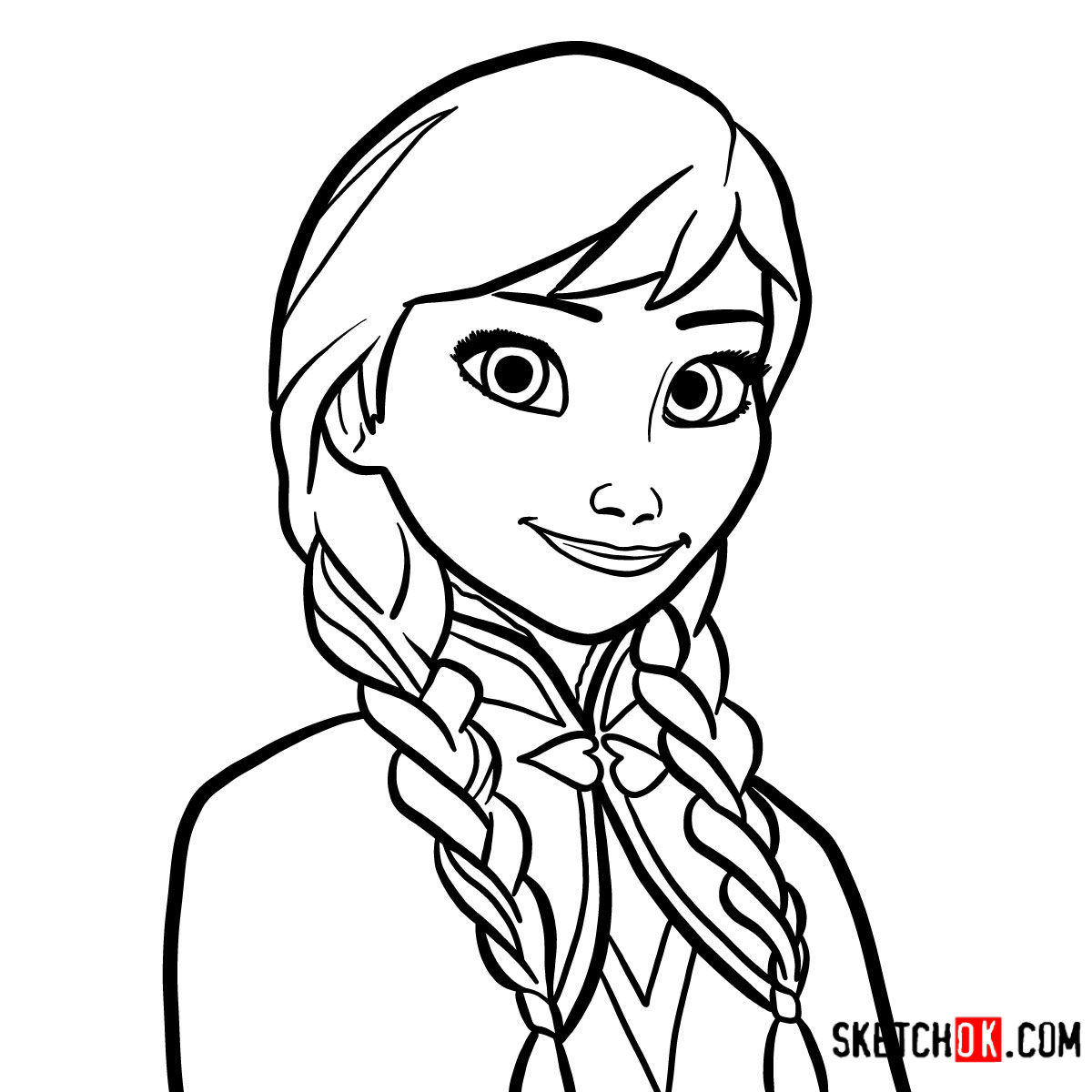
Now that you’ve got the basics of how to draw Anna’s face down, try setting the drawing aside for a couple of days and then redoing it from scratch. You’ll almost always spot improvement the second time around, and the muscle memory starts to stick. New guides go up regularly on SketchOk’s Pinterest, and video versions of some guides appear on the YouTube channel if you prefer watching the process in motion.
