Last Updated on May 13, 2026
Introduction: Plunge into the Artistic Ocean with Sharpedo
Welcome, artists! Ready your pencils as we dive deep into the Pokémon universe to sketch the fierce, oceanic predator, Sharpedo. Our step-by-step guide makes drawing this captivating character a breeze. So, let’s set sail on this artistic adventure!
Familiarizing with Sharpedo: Key Aspects and Drawing Focus Points
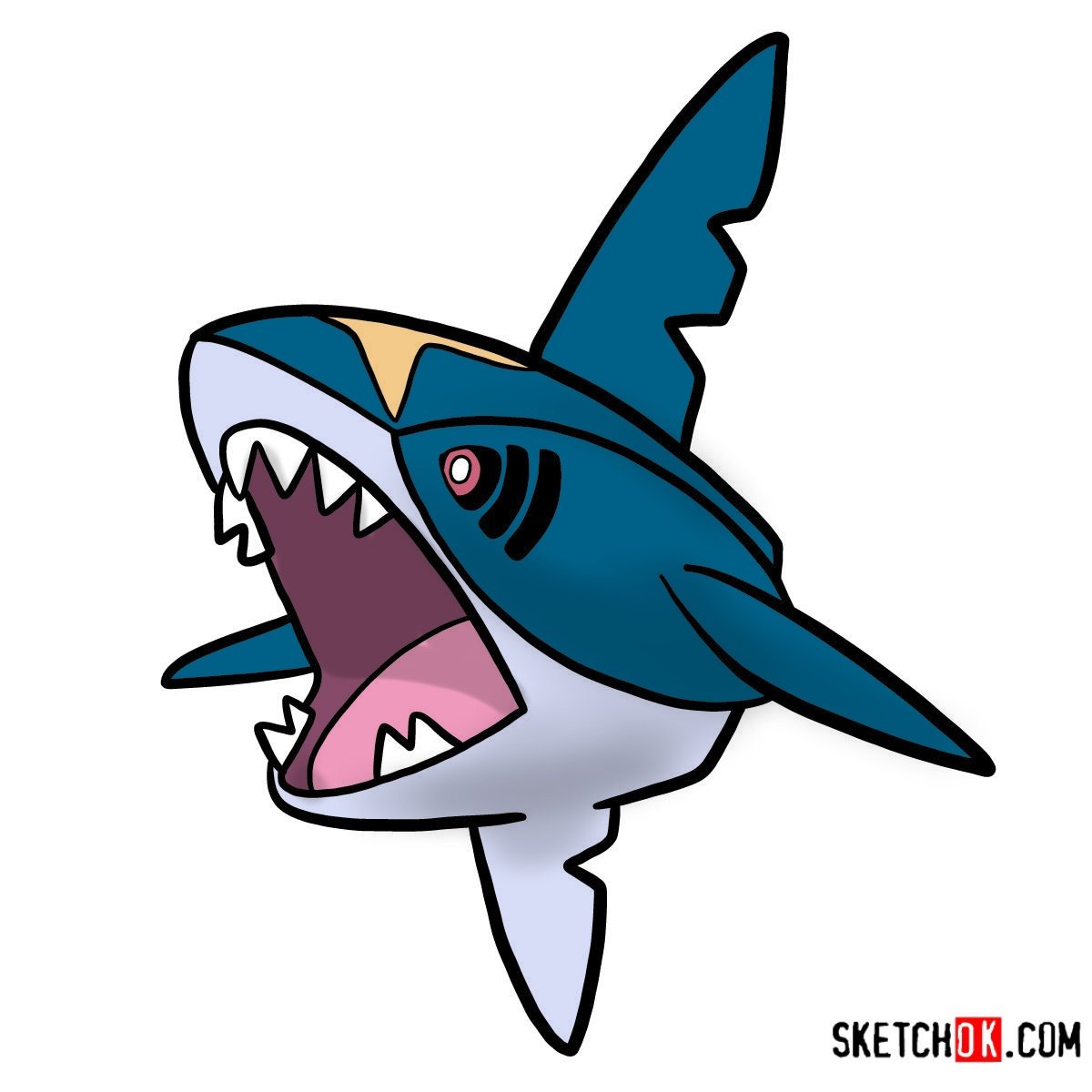
Sharpedo, a formidable creature inspired by the raw power of sharks, has distinct features that set it apart. When drawing Sharpedo, the following attributes are essential to capture:
- Its body boasts a dark cyan blue color on the top with a yellow star and two grooves on its top fin, and a crisp white underside with a single groove.
- Sharpedo has two black, rectangular gills on each side, contributing to its menacing, marine look.
- Its eyes are a mix of red, and white, lending a fierce glare, and its teeth, sharp and menacing, are a hallmark of its predatory nature.
You might want to contemplate infusing other ocean-residing Pokémon into your artwork to amplify its narrative and dynamism. Consider adding creatures like Wailord, the giant whale Pokémon, or Tentacruel, an imposing jellyfish-like Pokémon, or even Sharpedo’s younger stage, Carvanha, to provide a vibrant backdrop to your Sharpedo drawing.
Navigating the Guide: Understanding the Drawing Process
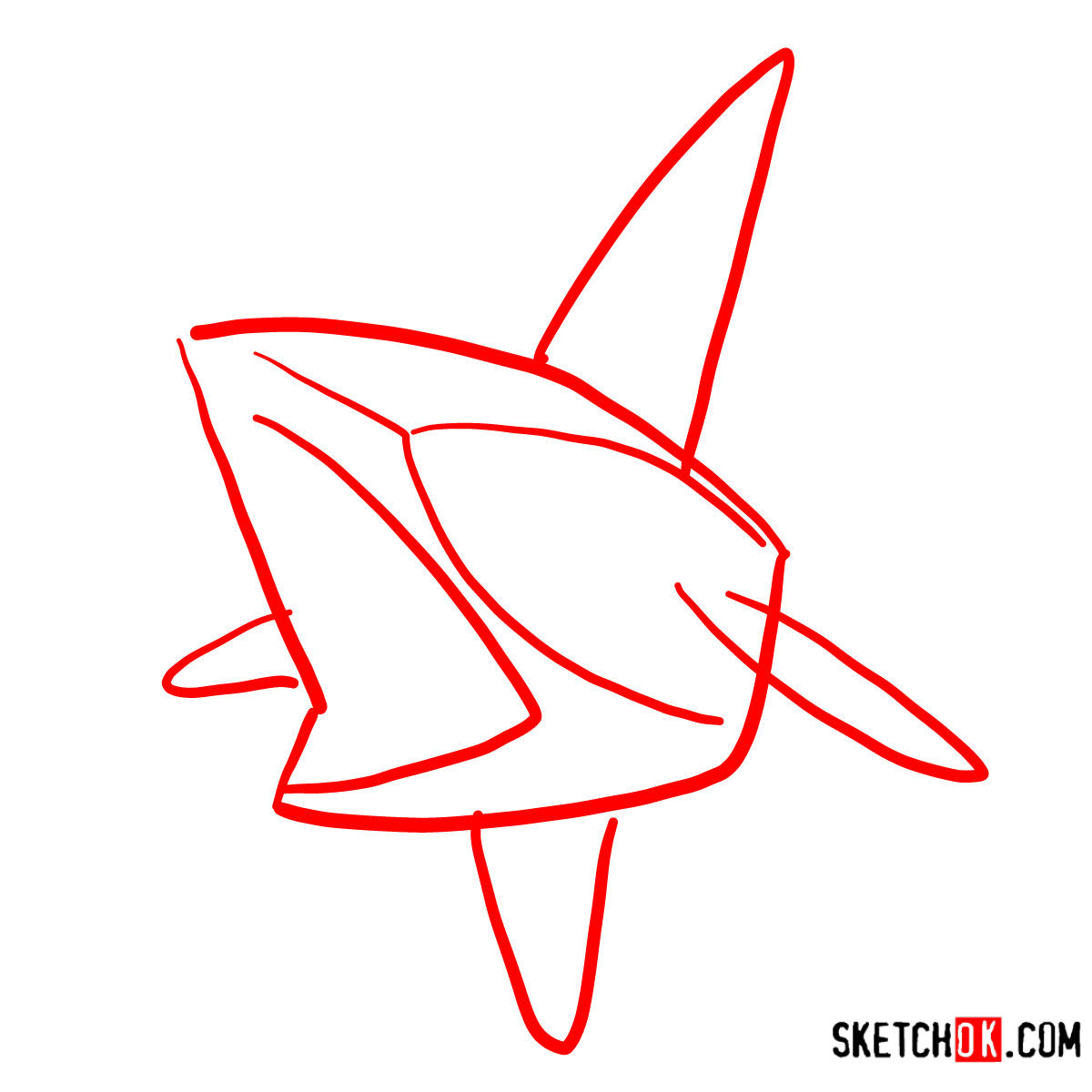
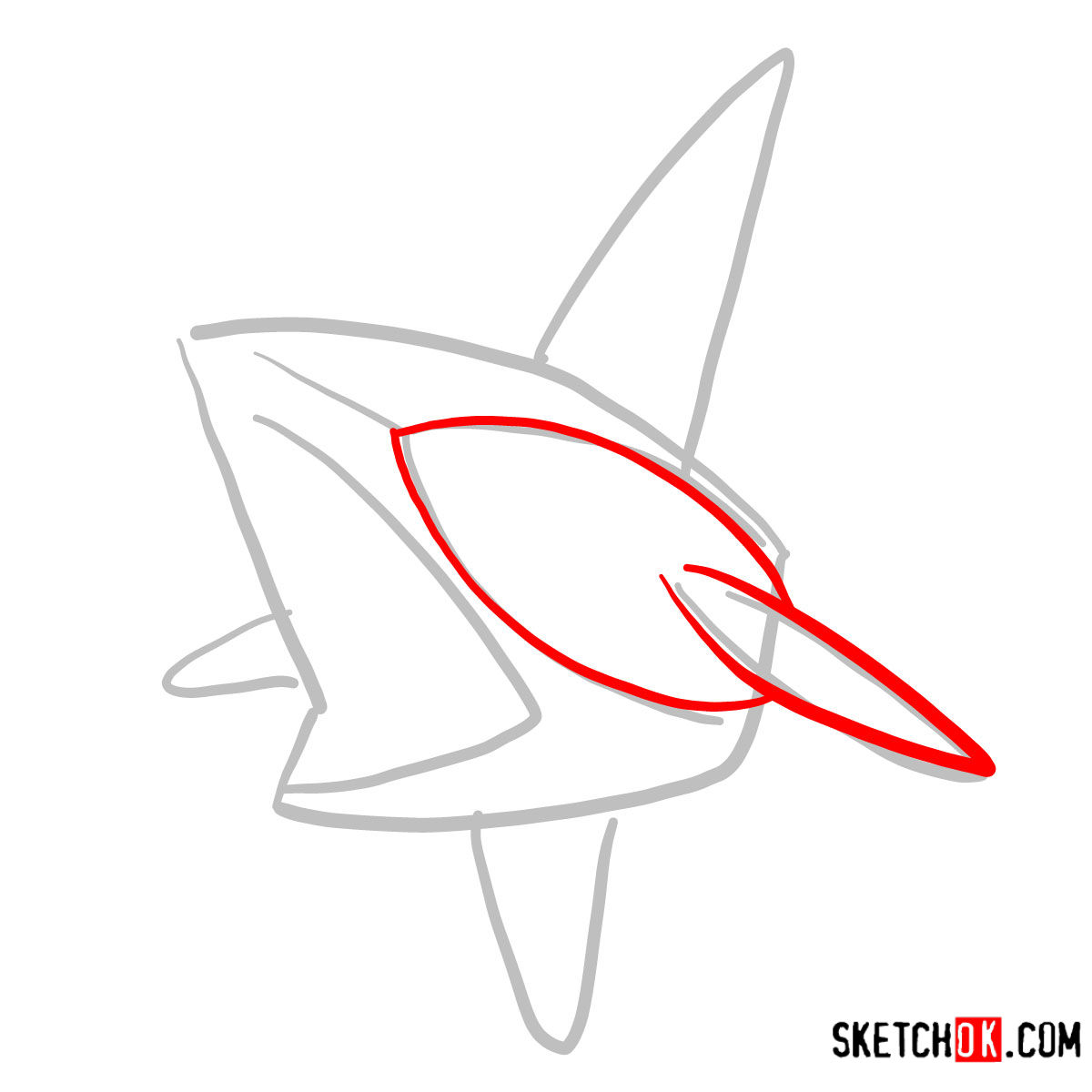
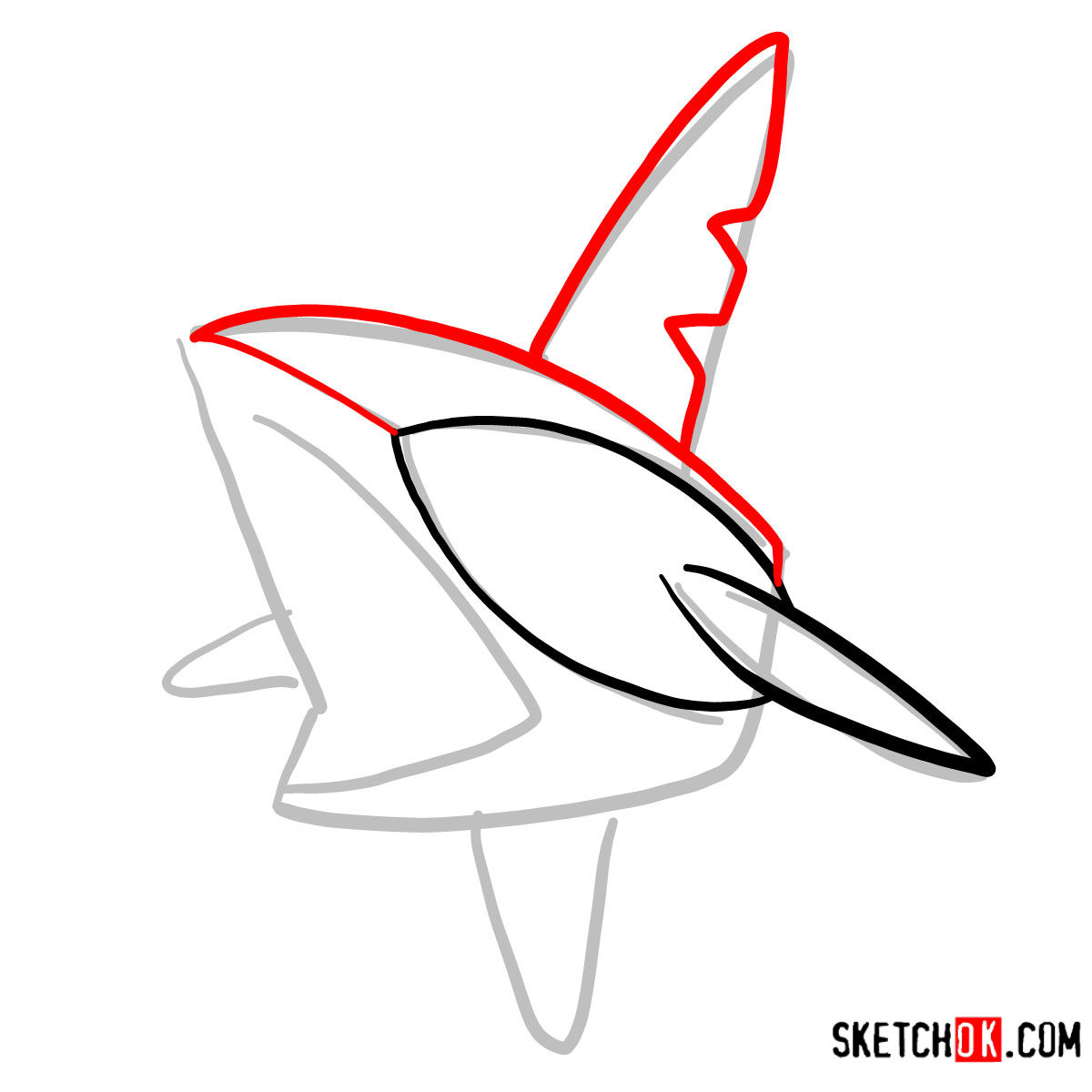
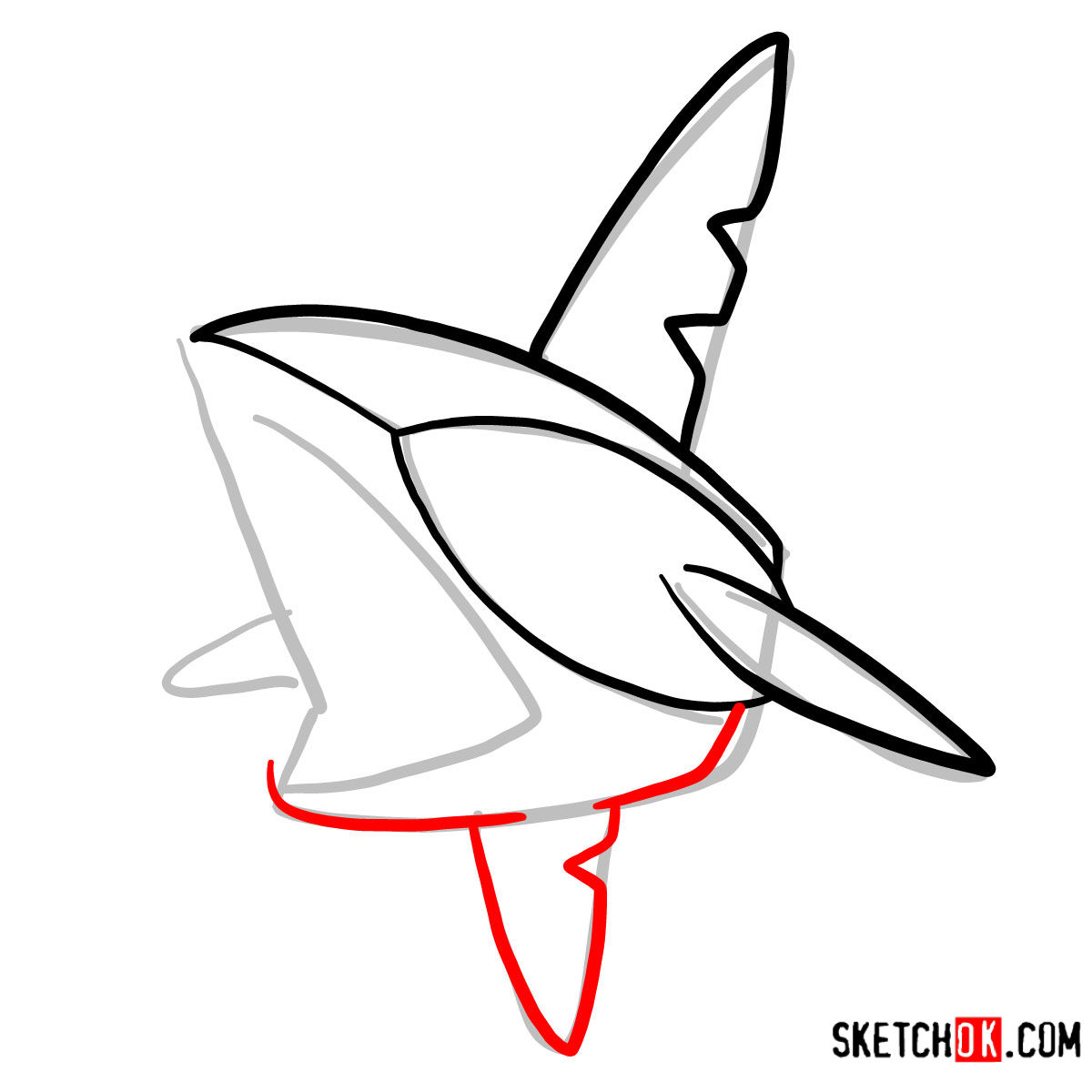
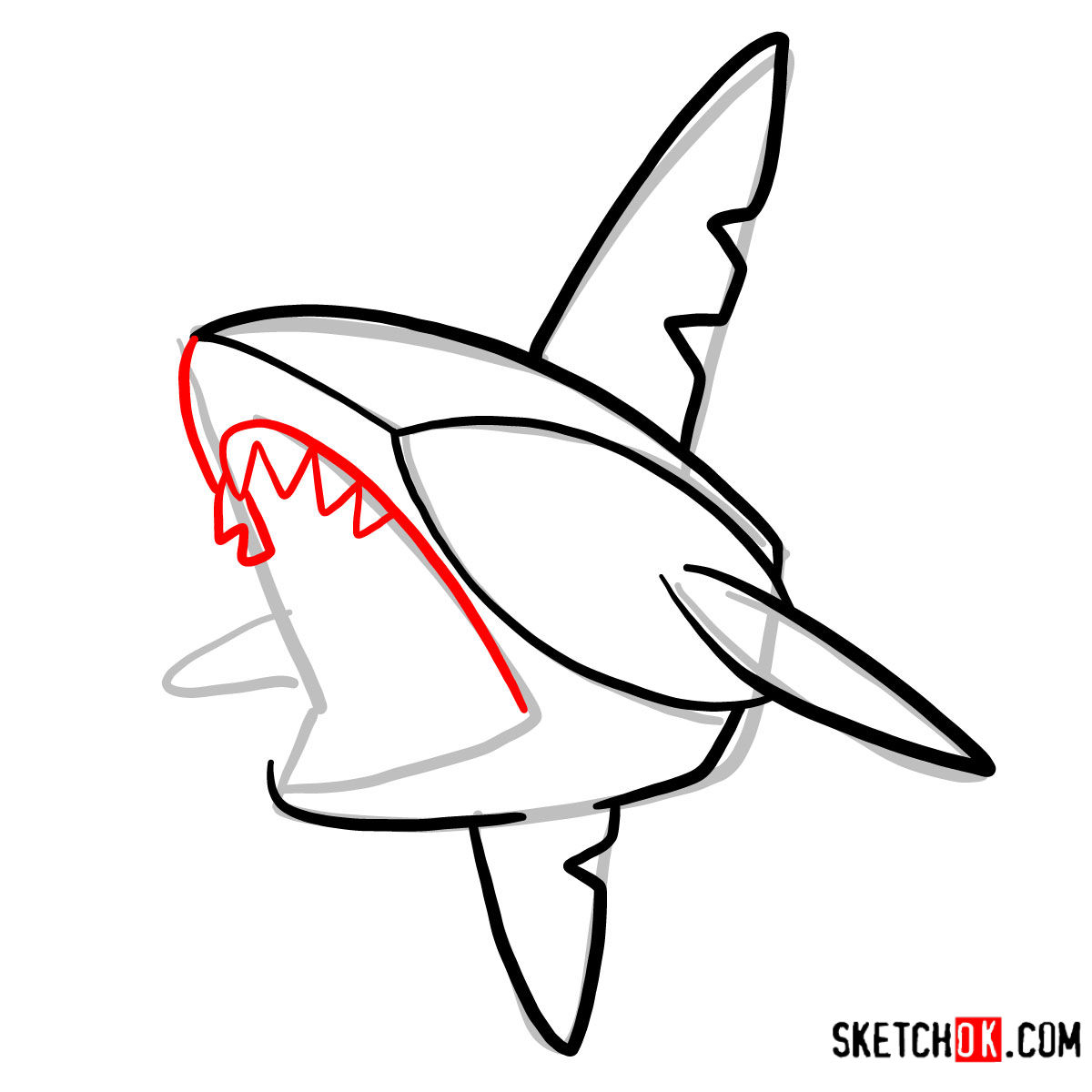
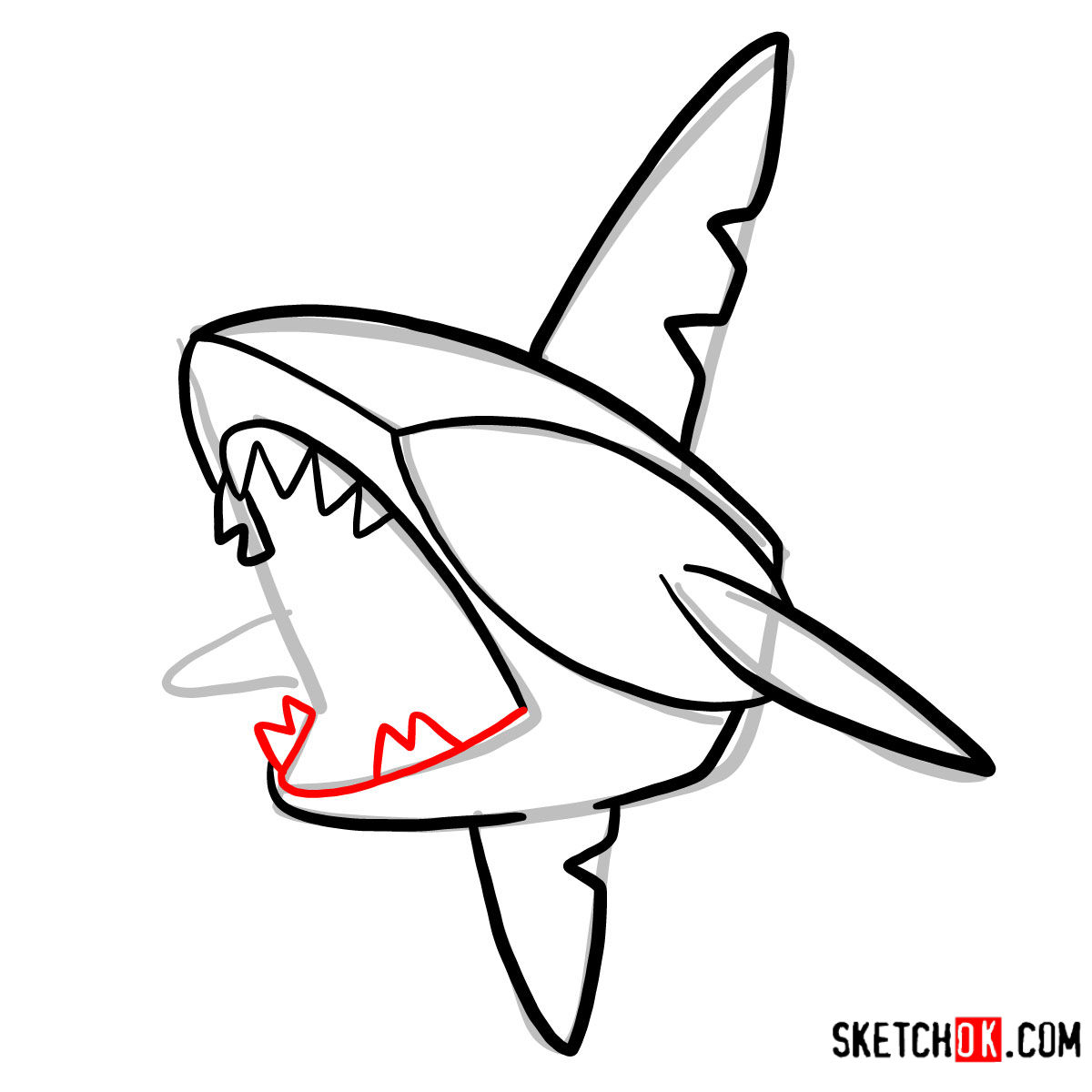
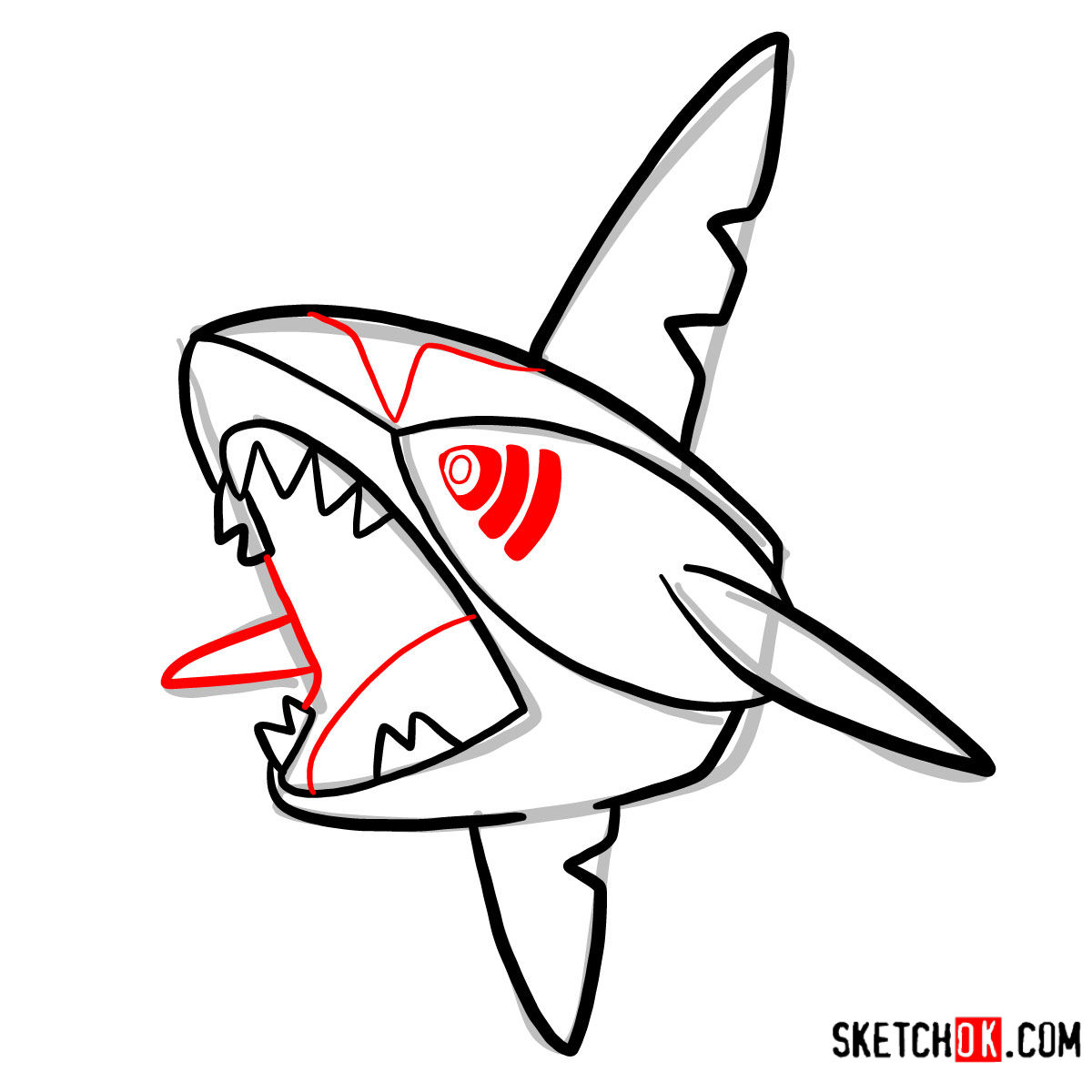
This guide breaks down the drawing process into 9 manageable steps, helping you sketch Sharpedo with precision and ease. Here’s how to interpret the color codes used:
- Red Color: Marks the current step, guiding your focus.
- Black Color: Displays the lines previously drawn, providing a roadmap of your progress.
- Grey Color: Outlines the basic sketch, the blueprint for your drawing.
As usual, the first step is devoted to crafting this foundational sketch using light pencil strokes. It helps establish accurate proportions early on and makes adjustments easier as you proceed.

Working through the process of learning how to draw Sharpedo can feel a little rough the first time around, but some of those shapes and proportions tend to click much better on a second pass. Give it another go once you’ve finished and you’ll probably notice the whole thing comes together more naturally. If you want a steady stream of new guides like this one, there’s an email signup at the top of the page where you can get a weekly batch of fresh Pokemon and other tutorials delivered straight to you.
