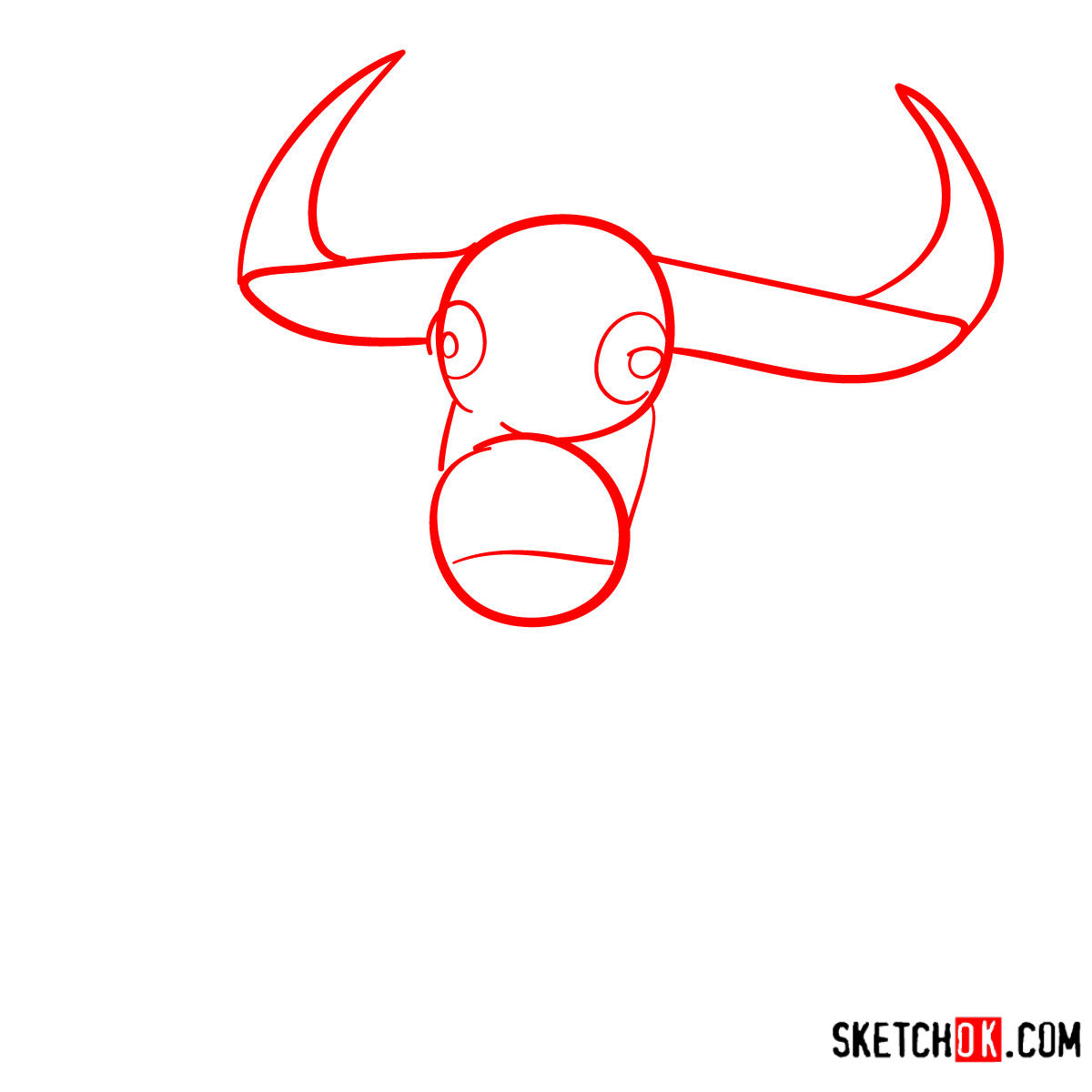
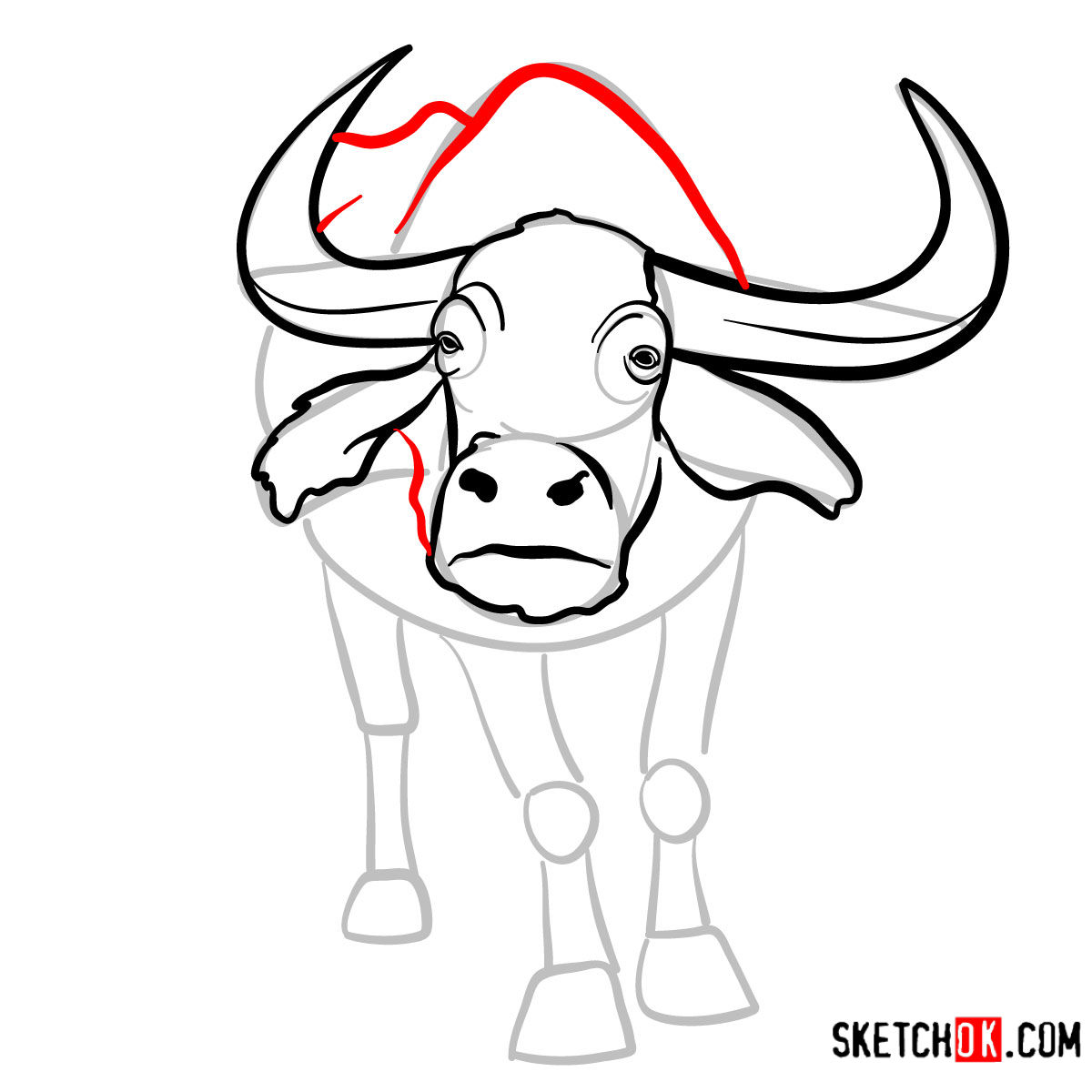
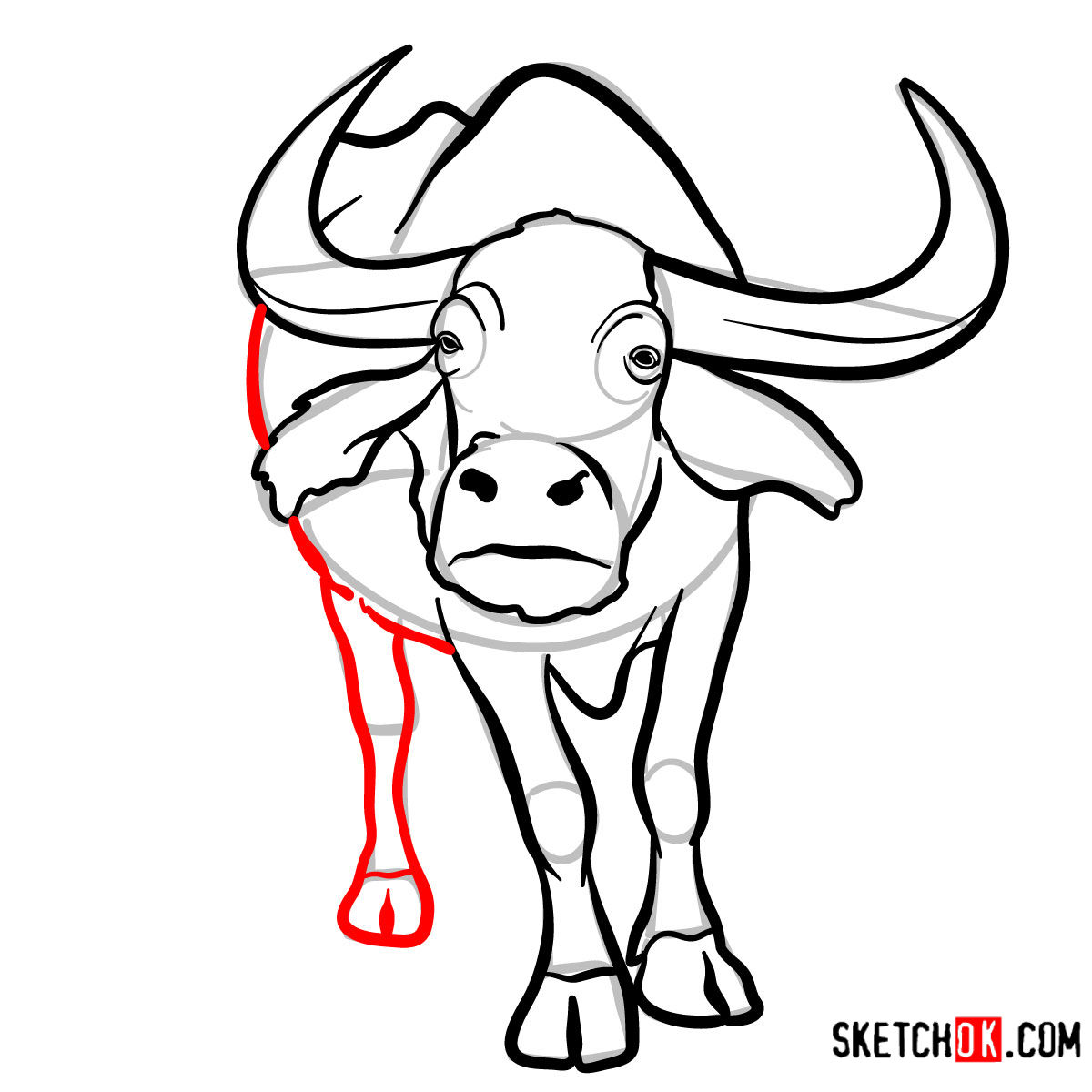
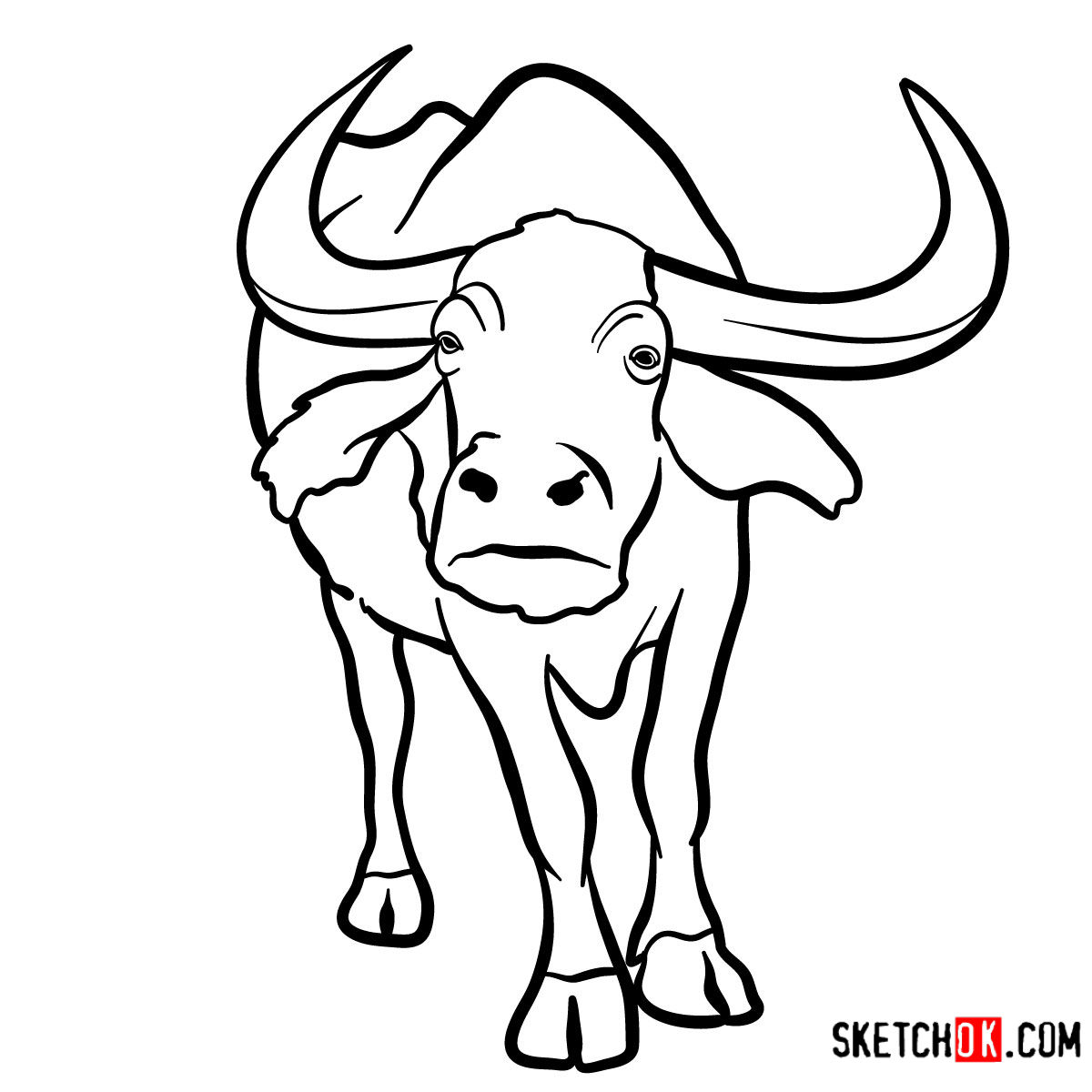
Those wide, curved horns curling outward from a broad, fused boss make the African Cape Buffalo one of the most structurally demanding animals to sketch, and this guide on how to draw a buffalo works through that frontal geometry in clear, manageable stages across the wild animals collection. The slightly lowered head gives the pose a sense of weight and alertness right from the start.
The Front View Challenge and What This Tutorial Covers
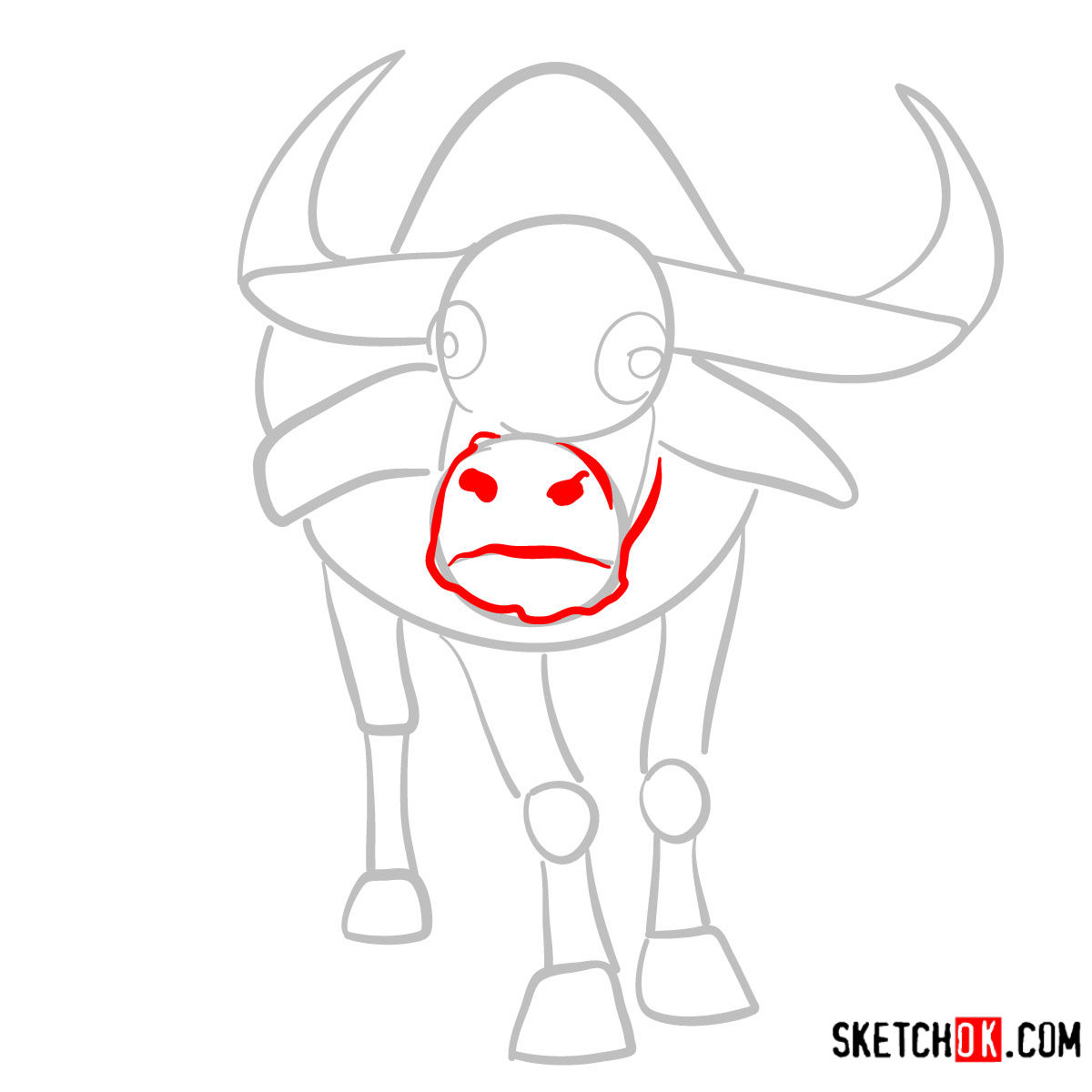
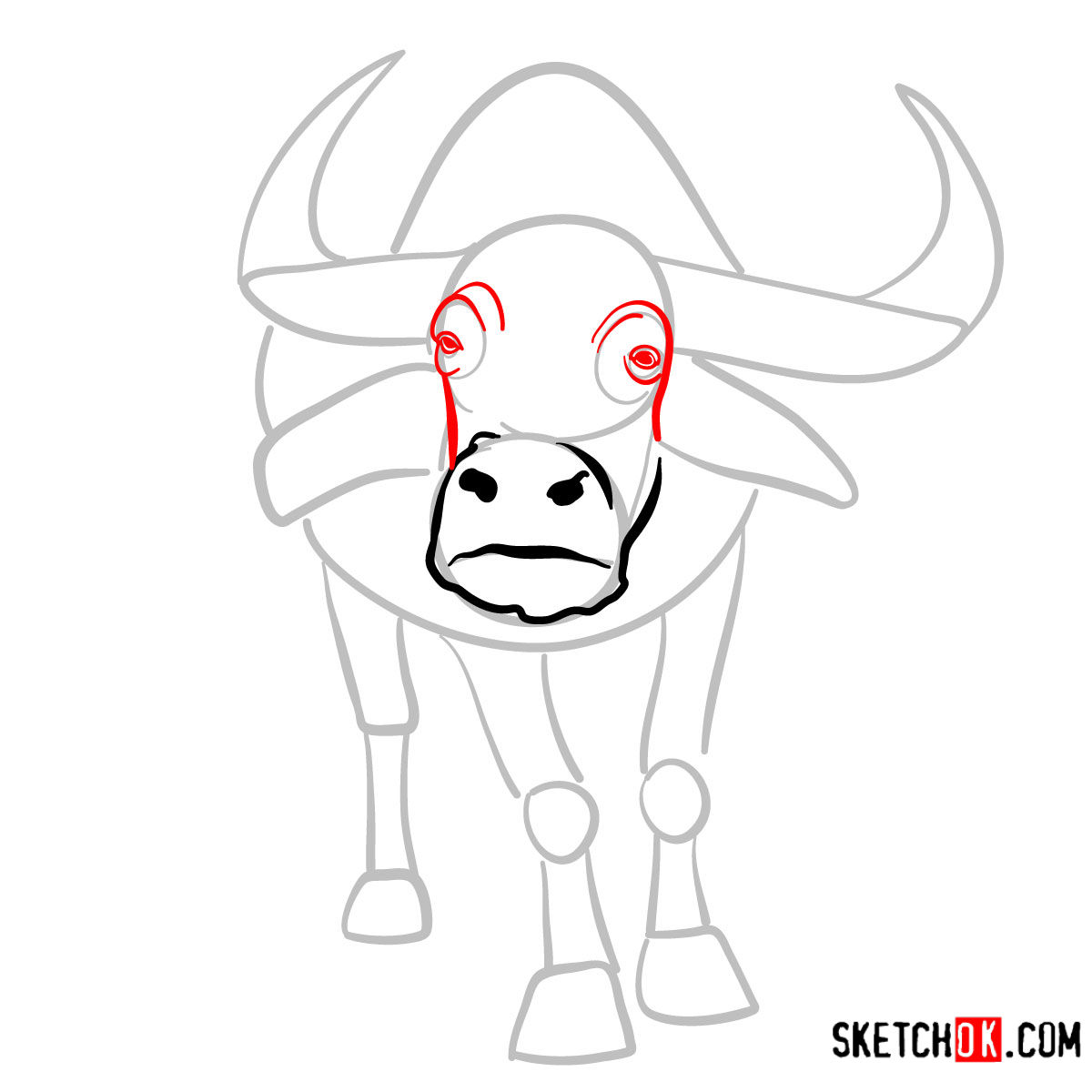
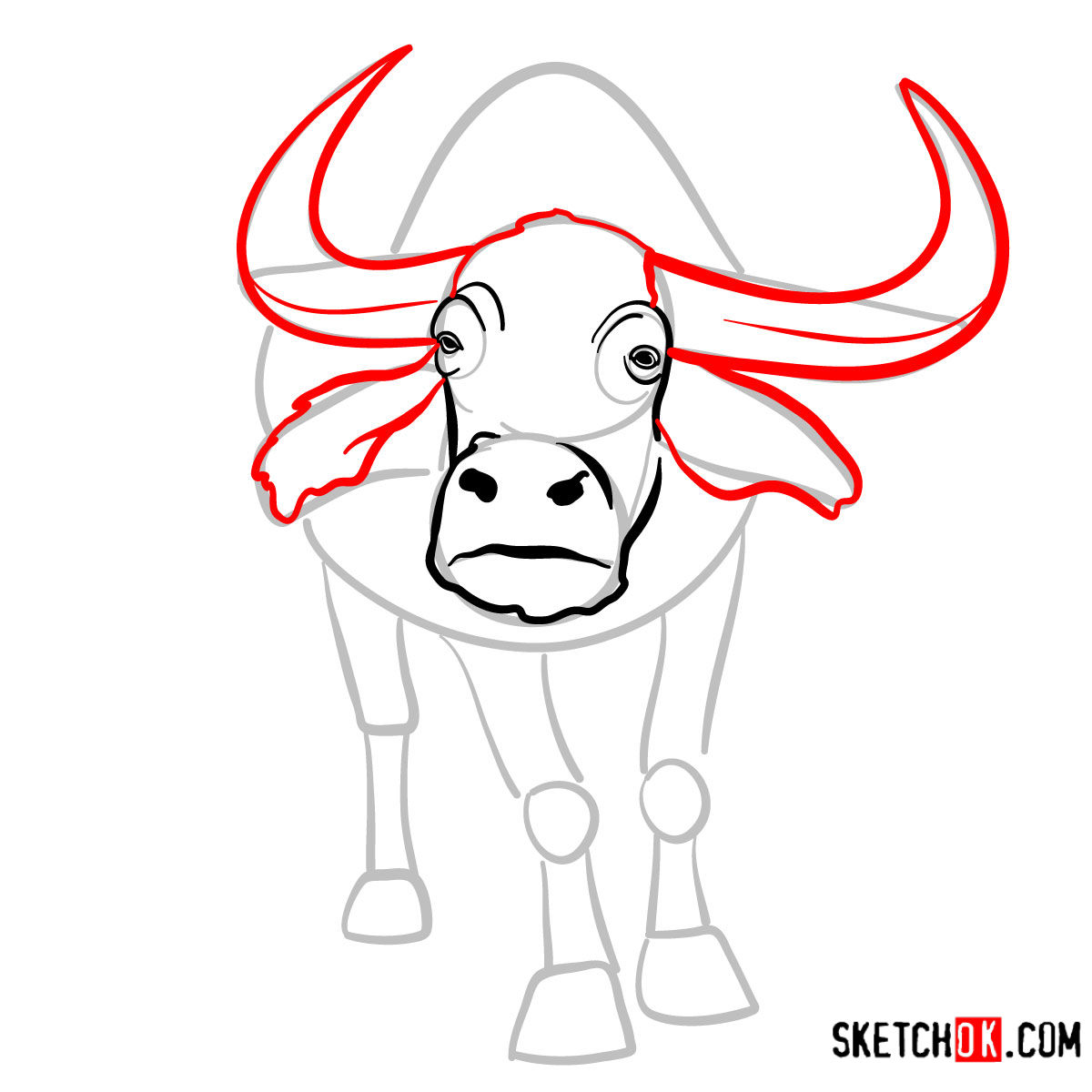
Drawing an animal head-on forces you to work with symmetry and foreshortening at the same time, which is where most people run into trouble with large mammals. This tutorial runs 10 steps total, ending in clean line art with no color added, so the focus stays on getting the shapes and proportions right. The wide horn sweep and the fused boss above the forehead are where the most careful line work is needed, and the steps space that construction out gradually so it does not pile up all at once.
Key Visual Features of the Cape Buffalo
- Large curved horns with wide fused base
- Broad, flat forehead with heavy boss
- Wide flat muzzle, large nostrils
- Ears flared outward on both sides
- Front-facing stance, hooves visible below
If you enjoy drawing large animals with complex head structures, the elephant head front view covers a lot of the same symmetry work, and the realistic lions in different poses collection is worth checking out for practice with heavy-featured faces. For something with a similar horn-and-snout challenge, the cheetah full body side view offers a good contrast in body proportion and stance.
Reading the Step-by-Step Color Coding
Each step in this tutorial uses a simple three-color system to show exactly what changes at each stage:
- Red Color: lines added in the current step.
- Black Color: lines completed earlier.
- Gray Color: base sketch for structure.
How to Draw a Buffalo: Step-by-Step Tutorial



Share Your Buffalo Sketch When You Are Done
Once you finish your drawing, drop it in the comments below. Seeing how different people handle the horn curve and the boss shape is genuinely useful for everyone working through the same tutorial. New guides go up on Facebook and Telegram as soon as they are published, a new YouTube video based on existing guides posts every single day, and Pinterest stays updated regularly if you prefer saving references there. For more large animal work, the full body elephant from the front and the wolves in different poses and styles collection are both solid next steps. If you want to support the project and get access to unique hand-drawn coloring pages, the Patreon page is the place to go.