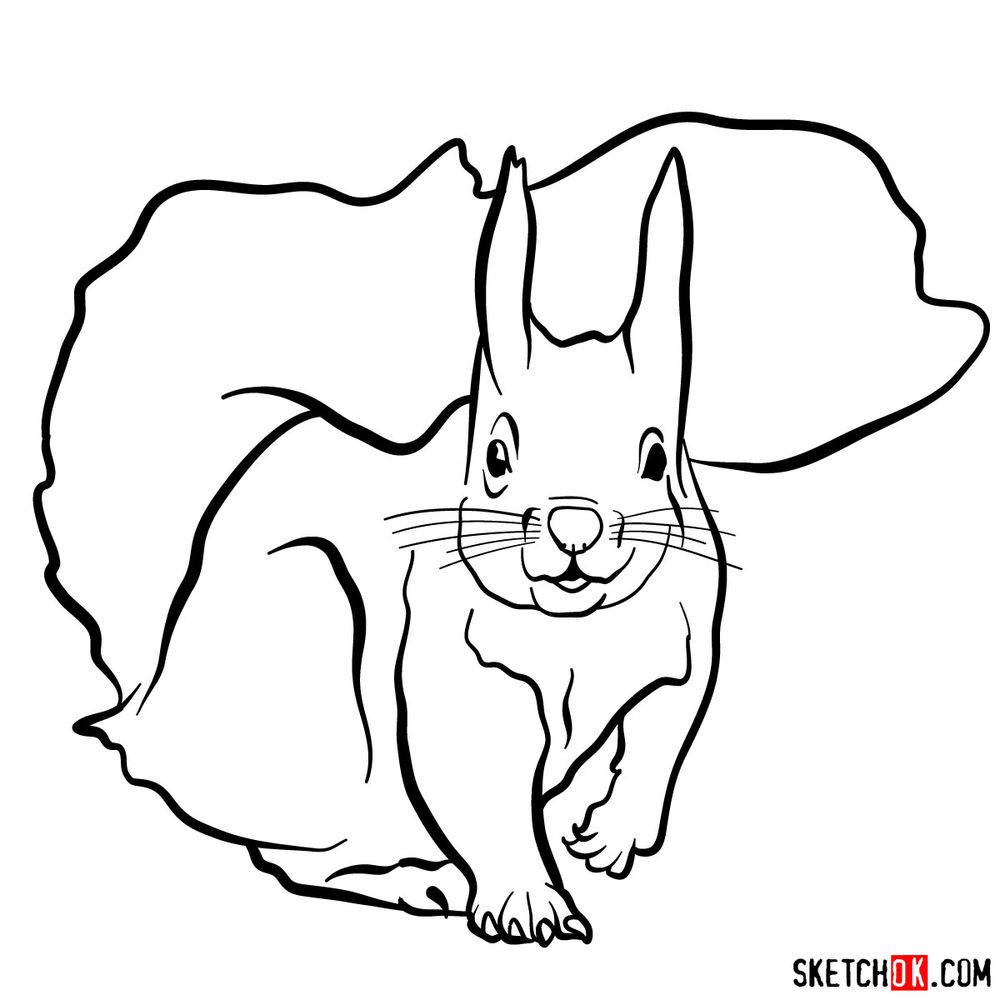
A front-facing stance with one paw raised and tail fanned wide behind the body is what this guide captures, walking through how to draw a squirrel across 9 clean line art steps alongside other wild animal tutorials on the site. The result is pure line work with no fill or shading, so the focus stays entirely on shape and proportion.
What the 9-Step Squirrel Sketch Covers
The tutorial runs 9 steps from first sketch marks to finished line art. The front-facing pose adds some symmetry work early on, while the dramatically spread tail takes up the most real estate on the page and requires the most line control. Because this is line art only, every step builds toward clean, confident outlines rather than a shaded finish.
Key Features to Notice Before You Start
- Large bushy tail fanned out behind body
- Pointed ears with tufts at the tips
- Round eyes, small nose, prominent whiskers
- One front paw raised, forward-facing pose
- Compact body with visible clawed feet
If you enjoy sketching animals with expressive shapes, the cheetah full body side view is a solid next step for practicing longer limbs and a different body profile. The cartoon-style Christmas deer covers a lighter, rounder approach to animal forms if you want a contrast to the squirrel’s tighter proportions. Both sit in the same wild animals section and work well alongside this guide.
Understanding the Color Coding in the Step Images
Each step image uses a simple three-color system to show progress:
- Red Color: lines added in the current step.
- Black Color: lines completed earlier.
- Gray Color: base sketch for structure.
How to Draw a Squirrel: Step-by-Step Tutorial


Finished Your Squirrel? Share It
Drop your finished drawing in the comments below. It is always worth seeing how different people handle the tail spread or the forward pose, and feedback helps other readers too. New tutorials get posted to Facebook and Telegram as soon as they go live, a new YouTube video based on existing guides goes up every day, and Pinterest stays regularly updated if you prefer saving references there. If you want to keep building on four-legged animals, the hippo walking toward you shares a similar front-view challenge, and the cougar standing in side view is a good follow-up for working on full-body proportions. Supporting the project on Patreon gives you access to unique hand-drawn coloring pages and helps keep new tutorials coming.