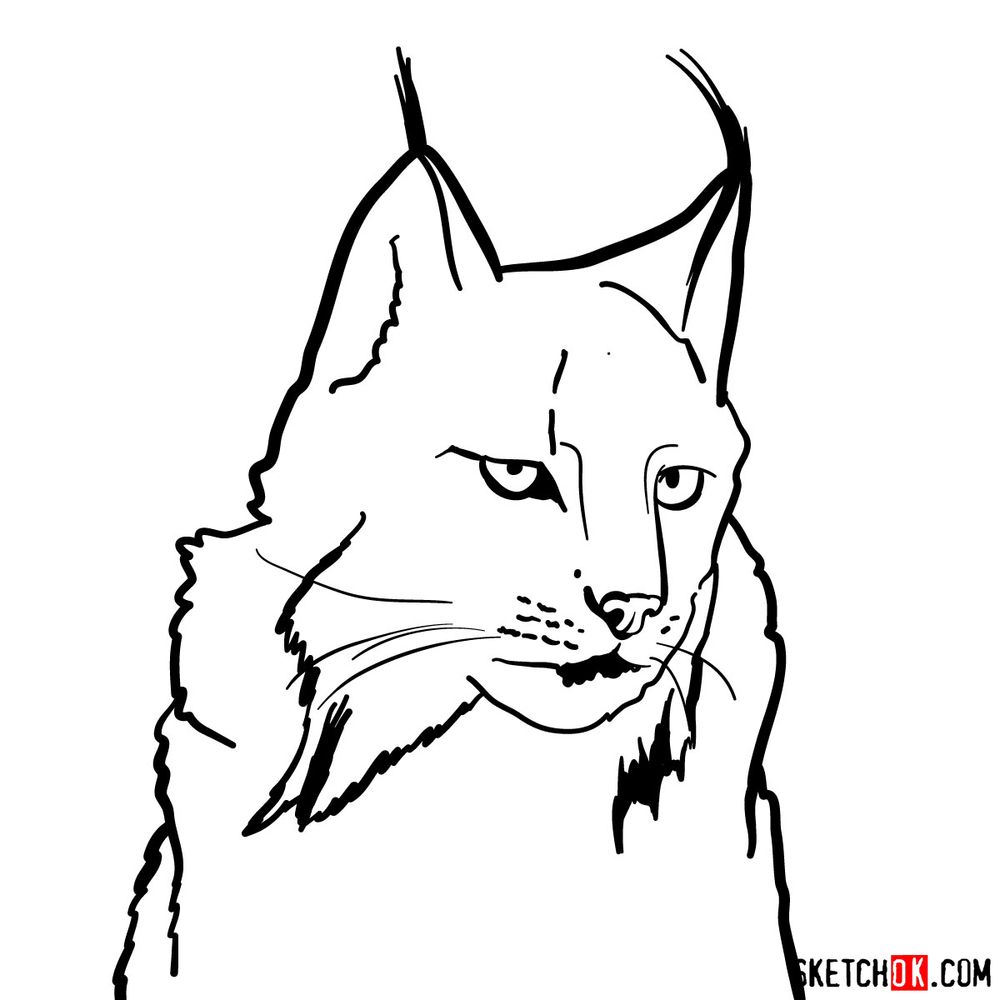
The ear tufts and cheek ruff are the two features that give this lynx head its character, and both require careful curve work to read correctly on paper. This guide on how to draw a lynx head covers the portrait at a three-quarter angle, which you can find alongside other wild animal tutorials on the site.
What to Expect from This 9-Step Portrait
The walkthrough runs 9 steps total and stays as line art throughout, so the focus is entirely on shape confidence and clean edges rather than shading or color. The three-quarter angle means the head is not symmetrical left-to-right, which takes a little more planning than a straight-on face view. Most of the detail work lands in the middle steps where the facial features, fur ruff, and whiskers come together.
Key Visual Features of the Lynx Head
- Portrait view, head at three-quarter angle
- Pointed ears with long tufts at tips
- Almond-shaped eyes, forward-facing gaze
- Long whiskers extending from muzzle
- Fluffy cheek ruff and chin beard
If you enjoy drawing animal heads with distinct facial structure, the deer sketch and the rhinoceros both offer good practice with different head shapes and proportions. For a head-only angle study, the rhino head side view is worth working through before or after this one.
How the Step Colors Work in This Tutorial
Each step image uses a three-color system to show exactly what is new versus what is already done:
- Red Color: lines added in the current step.
- Black Color: lines completed earlier.
- Gray Color: base sketch for structure.
How to Draw a Lynx Head: Step-by-Step Tutorial


Finished Your Lynx? Show It Off
Drop your finished drawing in the comments section below. Seeing how different people handle the ear tufts and cheek ruff is always useful for anyone working through the same sketch. New tutorials go live on Facebook and Telegram as soon as they are posted, a new YouTube video based on existing guides goes up every day, and Pinterest gets updated regularly too. If you want to go further, the jaguar side profile and the three-quarter elephant are both worth adding to your practice list. Supporting the project on Patreon gives you access to unique hand-drawn coloring pages and helps keep new tutorials coming.