Last Updated on April 19, 2026
Getting the proportions right on a spread wingspan while keeping a dynamic running pose readable is the main challenge in learning how to draw an archaeopteryx, and this guide works through both problems across 12 steps that also sit comfortably alongside other dinosaurs and extinct animals tutorials on the site. The feather detail on the wings and tail adds another layer of work, but the step count keeps things manageable without cutting corners.
What This Sketch Actually Asks of You
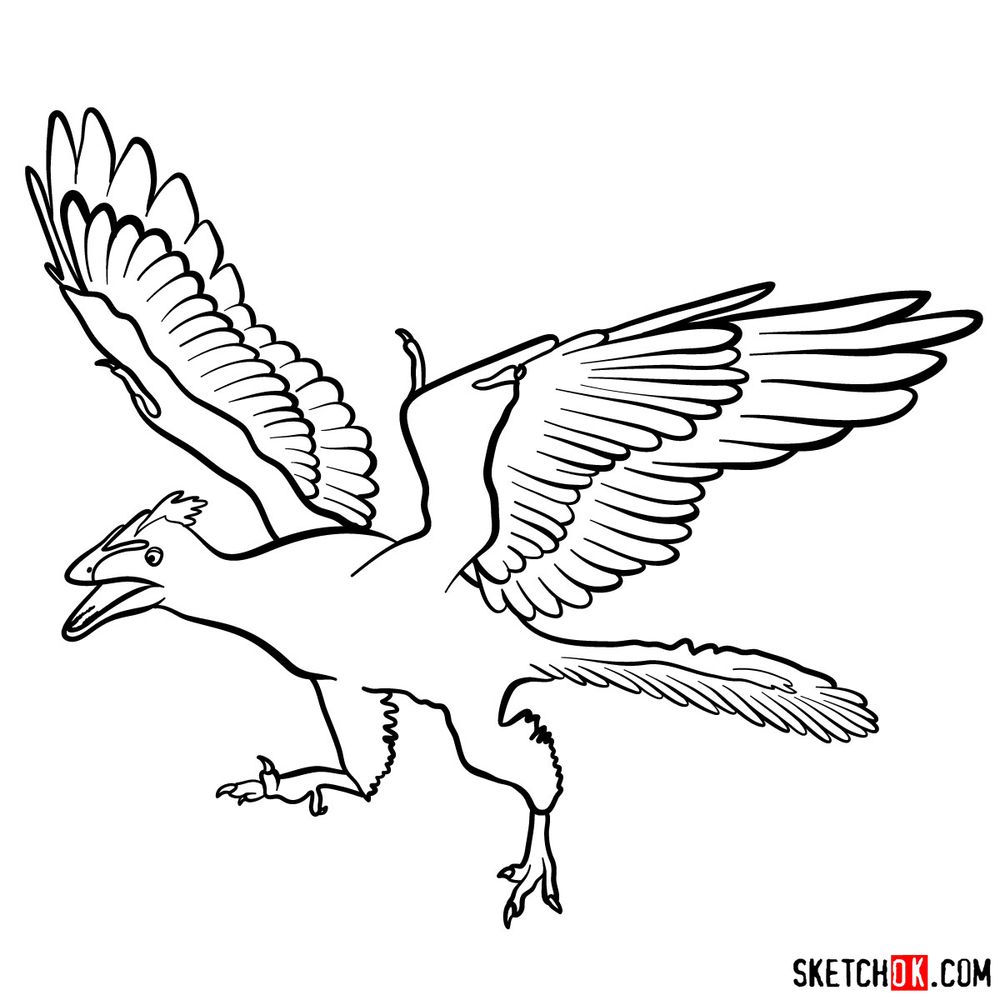
The tutorial covers 12 steps and ends on clean line art with no color pass, so all the focus goes into confident line control and structure. The pose is an action shot with the wings raised and the legs lunging forward, which means left-right asymmetry is built into the drawing from the start. That asymmetry, combined with overlapping feather lines across the wings and tail, is where most of the slow-down happens.
Key Features to Keep in Mind While Sketching
- Large feathered wings spread wide open
- Toothed beak open, facing forward aggressively
- Feathered tail extending horizontally behind
- Clawed feet with sharp talons
- Small feathered crest on top of head
If you want more practice with prehistoric flyers before or after this one, the Pteranodon and Pterodactylus walkthroughs cover similar wing construction challenges from different angles. For something on the ground-based side, the stegosaurus guide is a good contrast in structure.
Reading the Step Colors in This Guide
Each step image uses a three-color system to show exactly what is new and what came before:
- Red Color: lines added in the current step.
- Black Color: lines completed earlier.
- Gray Color: base sketch for structure.
How to Draw an Archaeopteryx: Step-by-Step Tutorial


Finished Your Archaeopteryx? Share It
Once you have the final line art done, drop your drawing in the comments below so others can see how it turned out. Every new tutorial gets posted to Facebook and Telegram as soon as it goes live, a new YouTube video based on existing guides goes up every day, and Pinterest stays updated regularly, so following any of those keeps you in the loop. If you want more prehistoric subjects in a similar action-pose style, the Compsognathus and velociraptor guides are worth checking out next. Supporting the project on Patreon also helps keep new tutorials coming, and patrons get access to unique hand-drawn coloring pages as a bonus.

I have never even heard of this animal before!
It is very easy and good for drawing tutorial