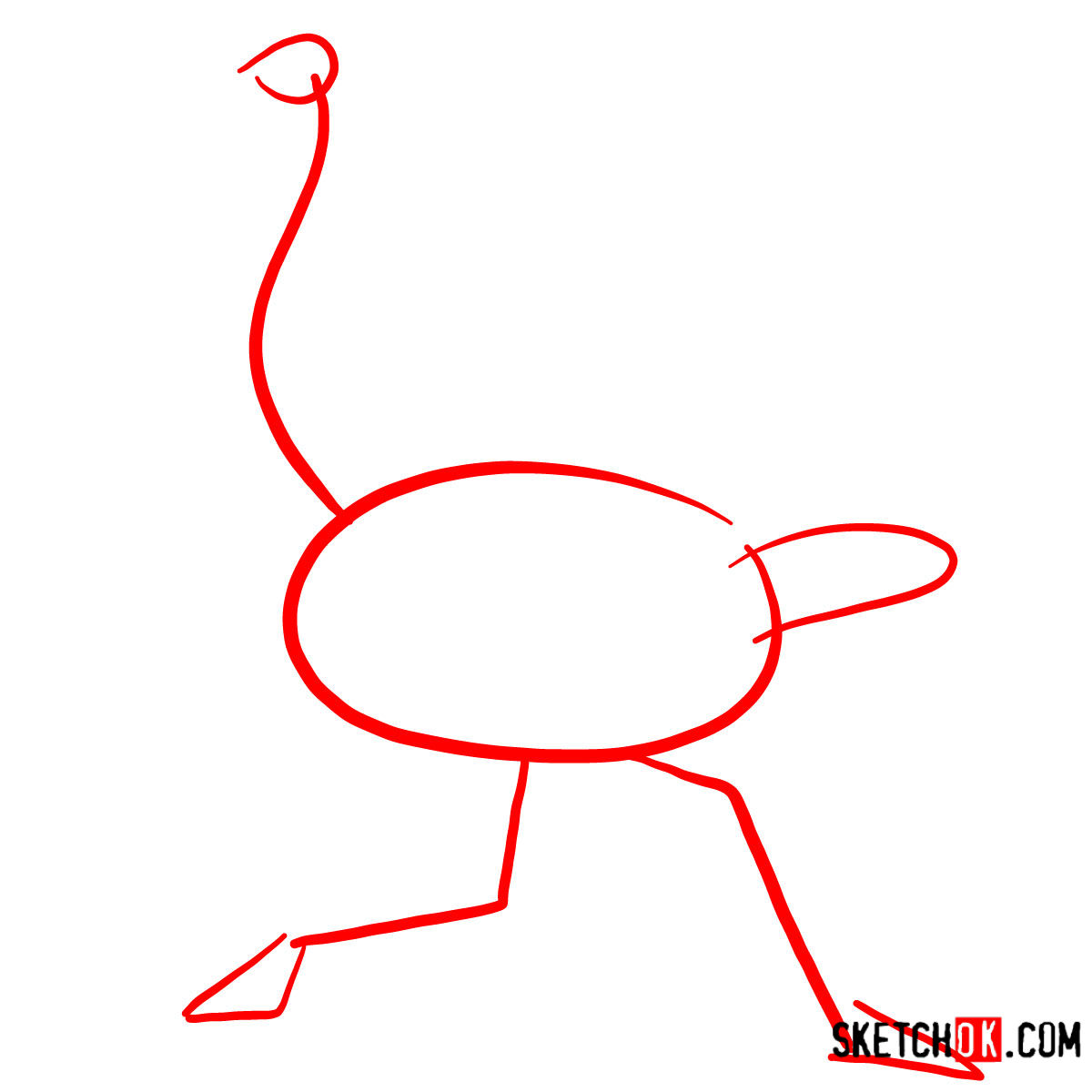
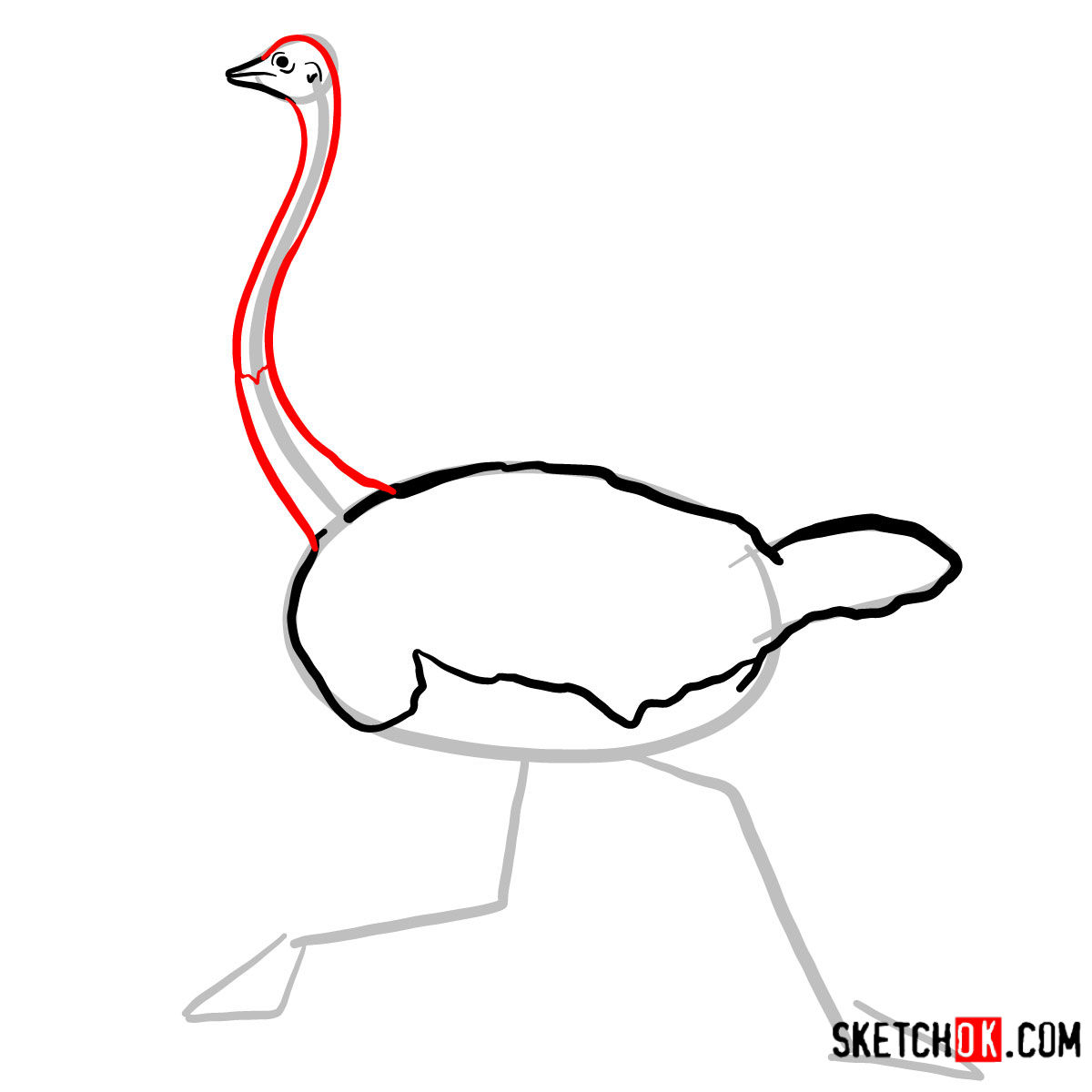
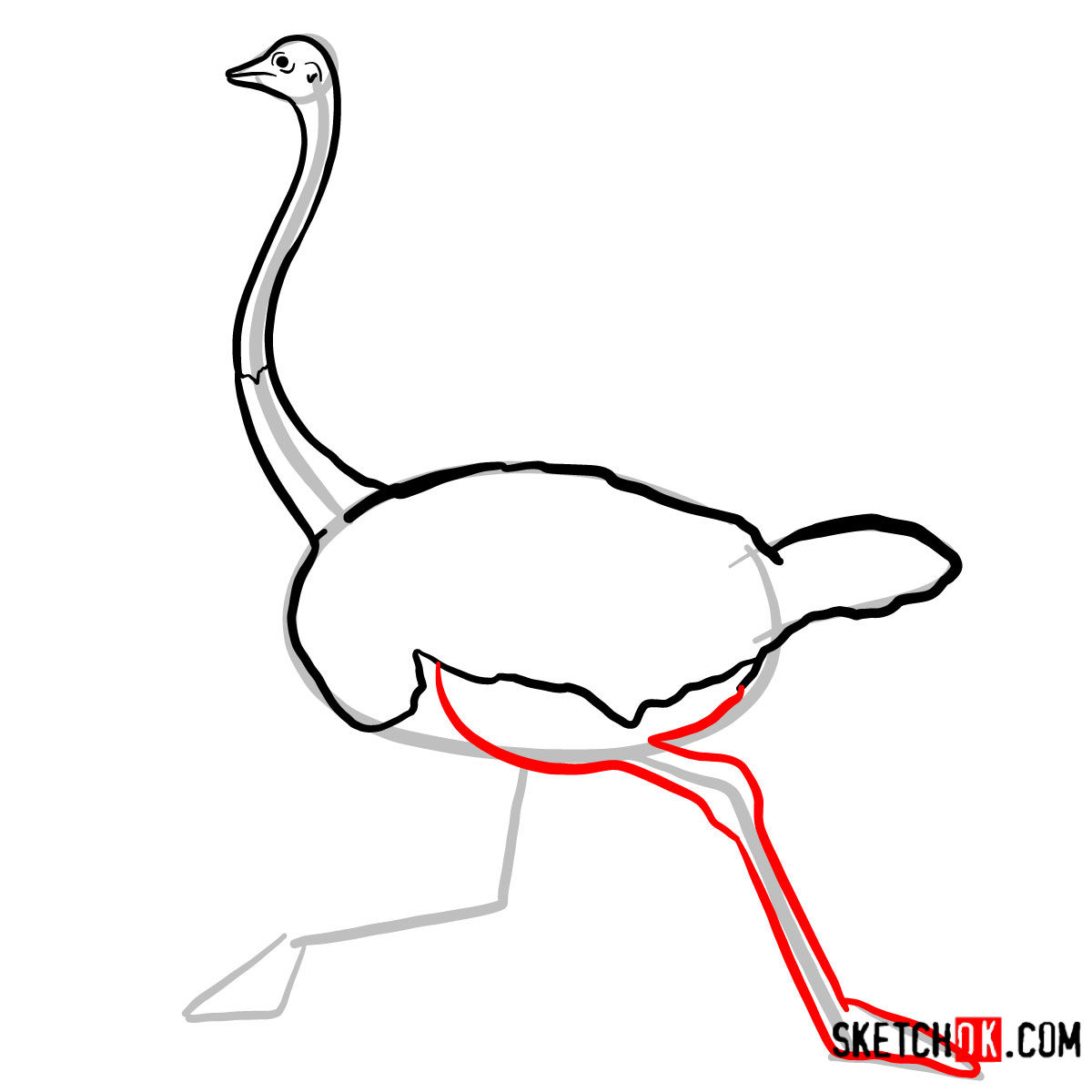
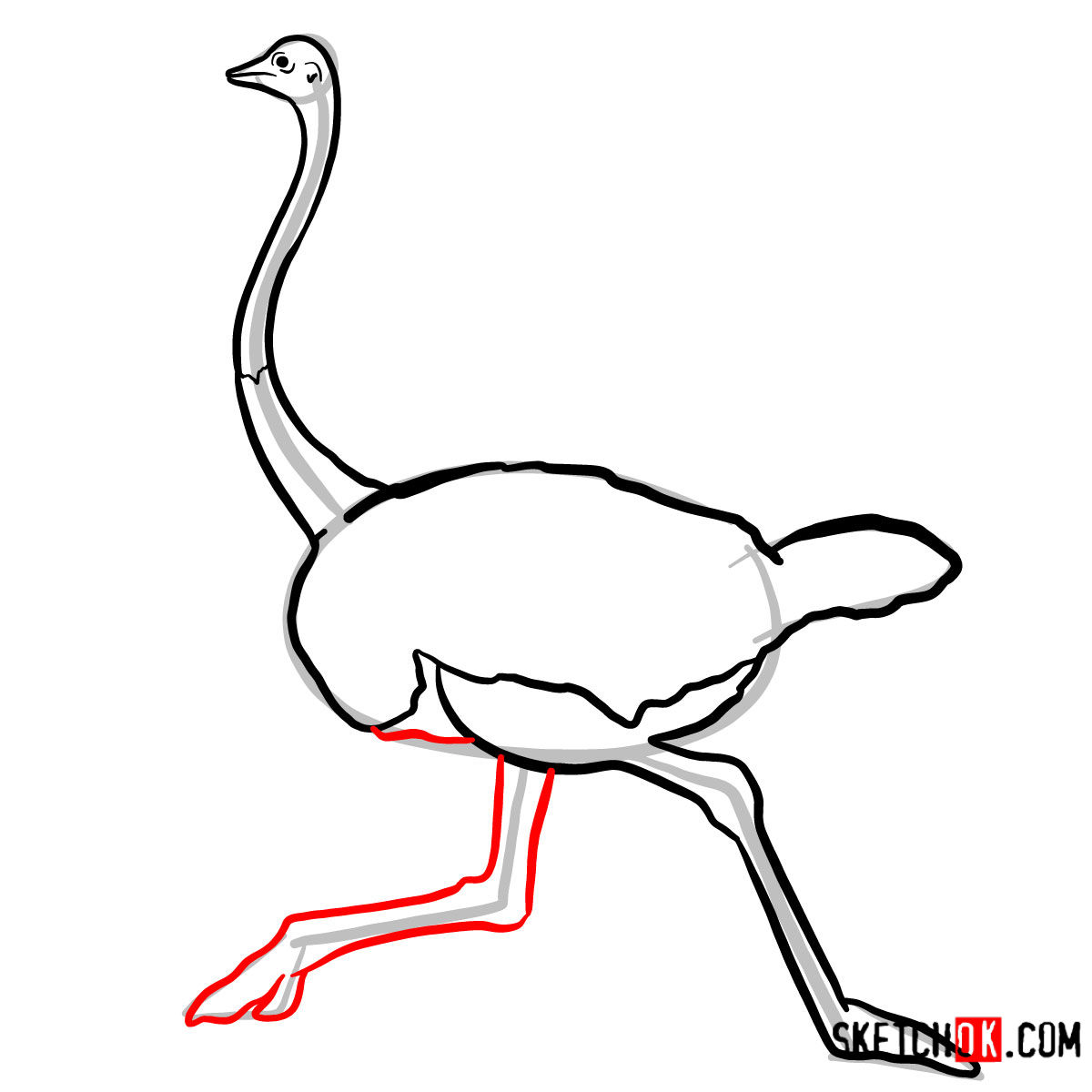
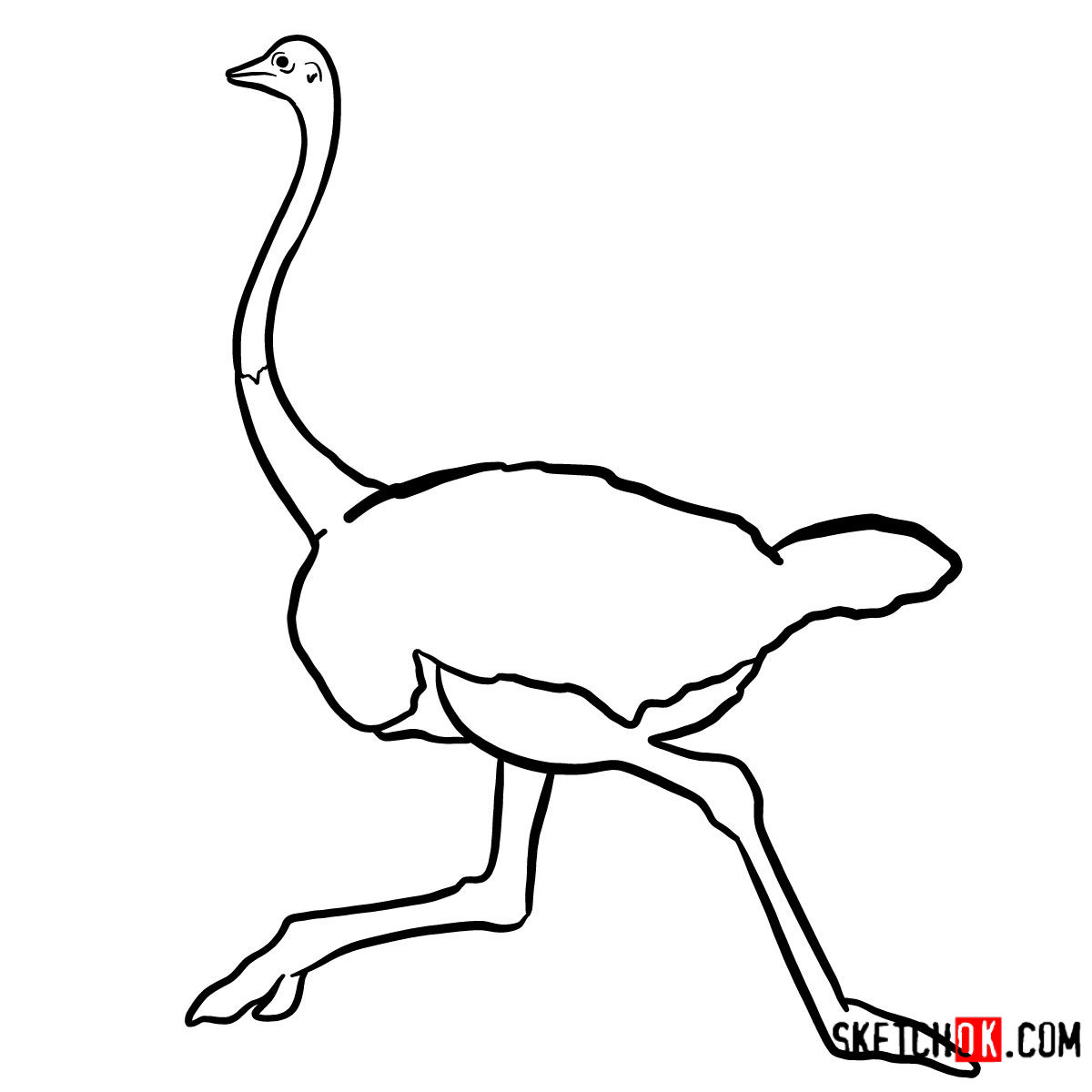
Two legs built for speed and a body that never leaves the ground make the ostrich one of the more unusual subjects in the Birds drawing guides on the site, and this tutorial on how to draw an ostrich captures that full-stride running pose in clean line art. The side profile view keeps the proportions readable while still giving you the challenge of those long limbs in motion.
What Goes Into Drawing a Running Ostrich
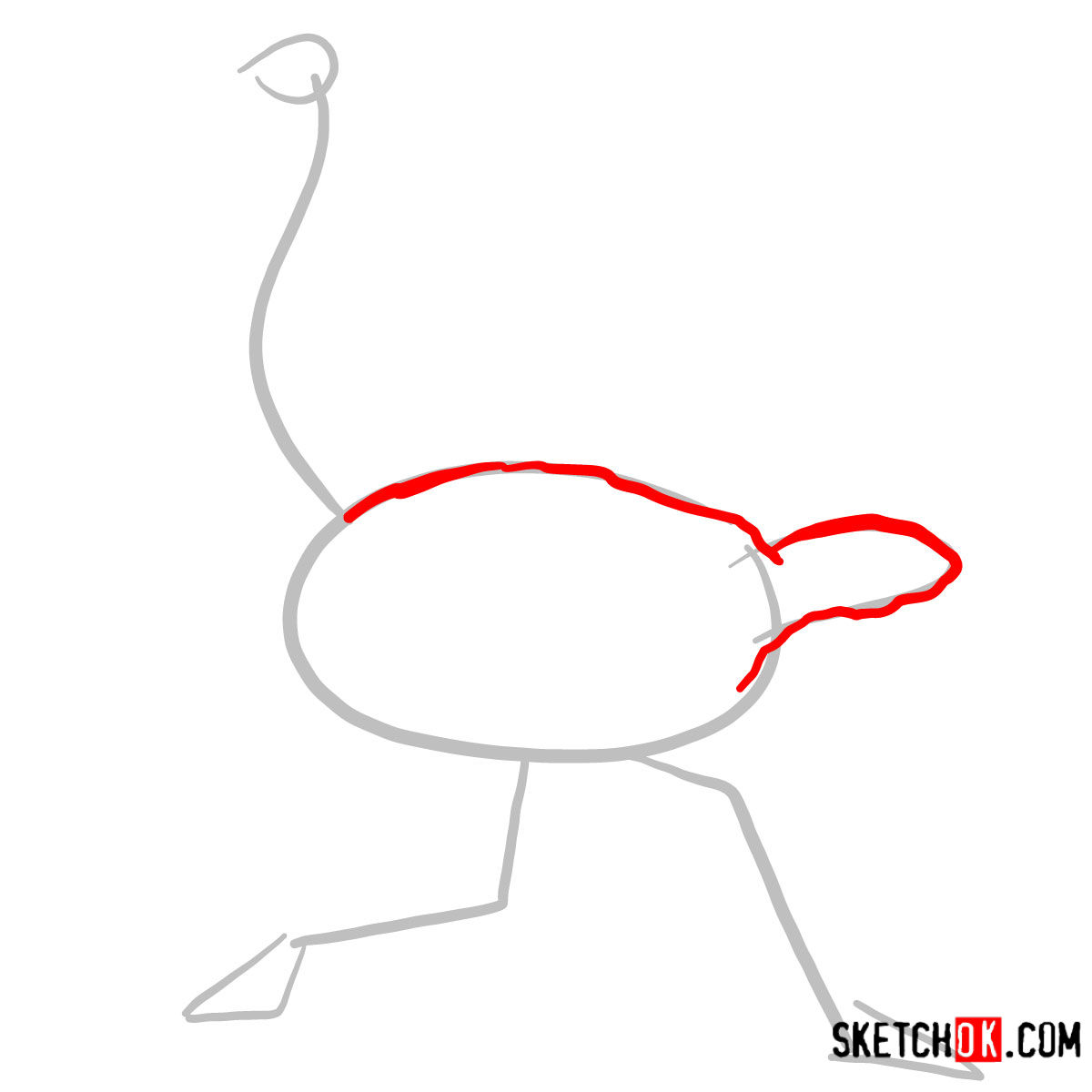
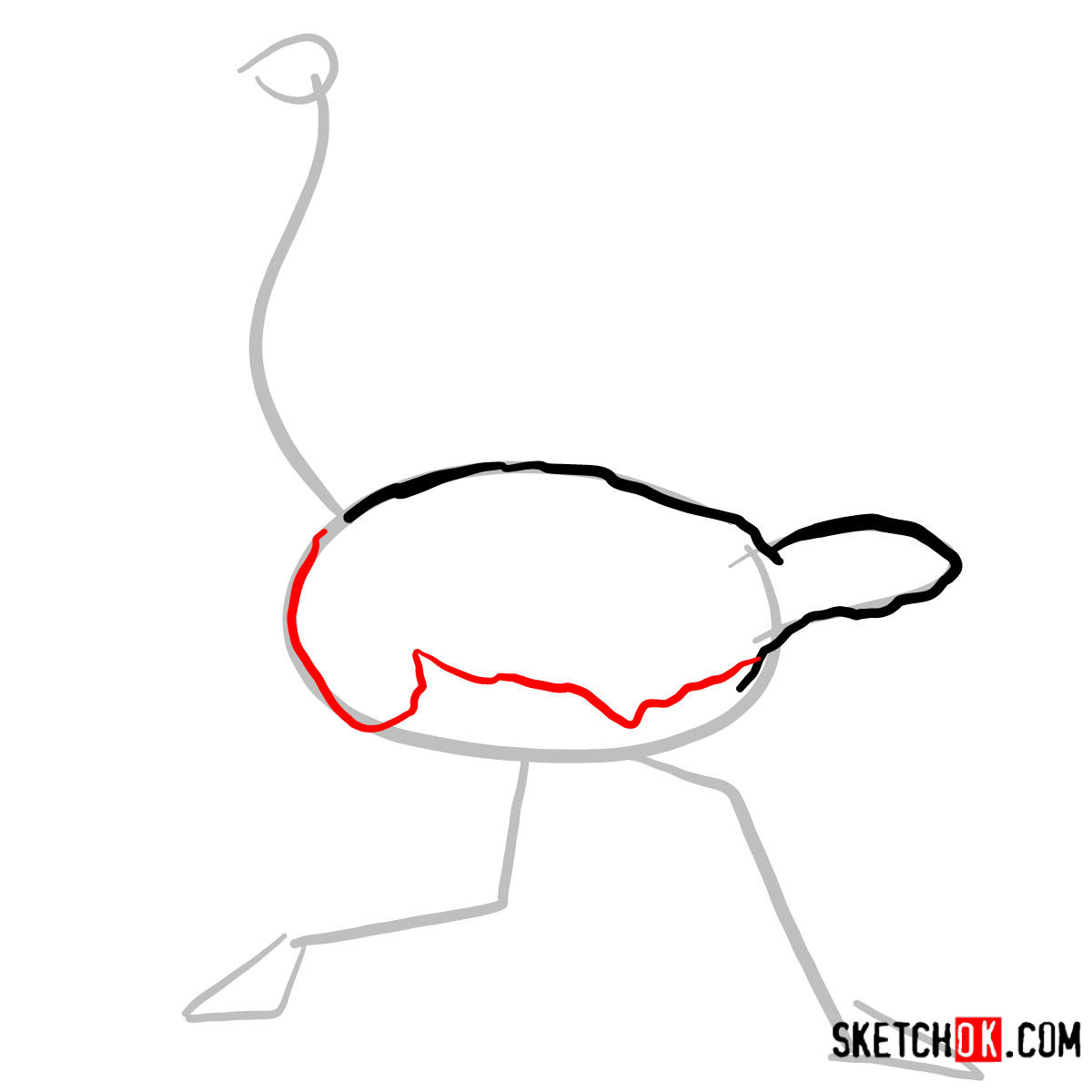
The tutorial runs through 8 steps and stays as line art throughout, so there is no color work to worry about. The main challenge here is the stride pose: the legs are mid-step, which means they are at different angles and require some attention to get them looking balanced rather than stiff. The long neck curving upward also takes a light hand to sketch smoothly.
Key Features of the Ostrich Design
- Large round feathered body with wing plumage
- Long slender neck curving upward
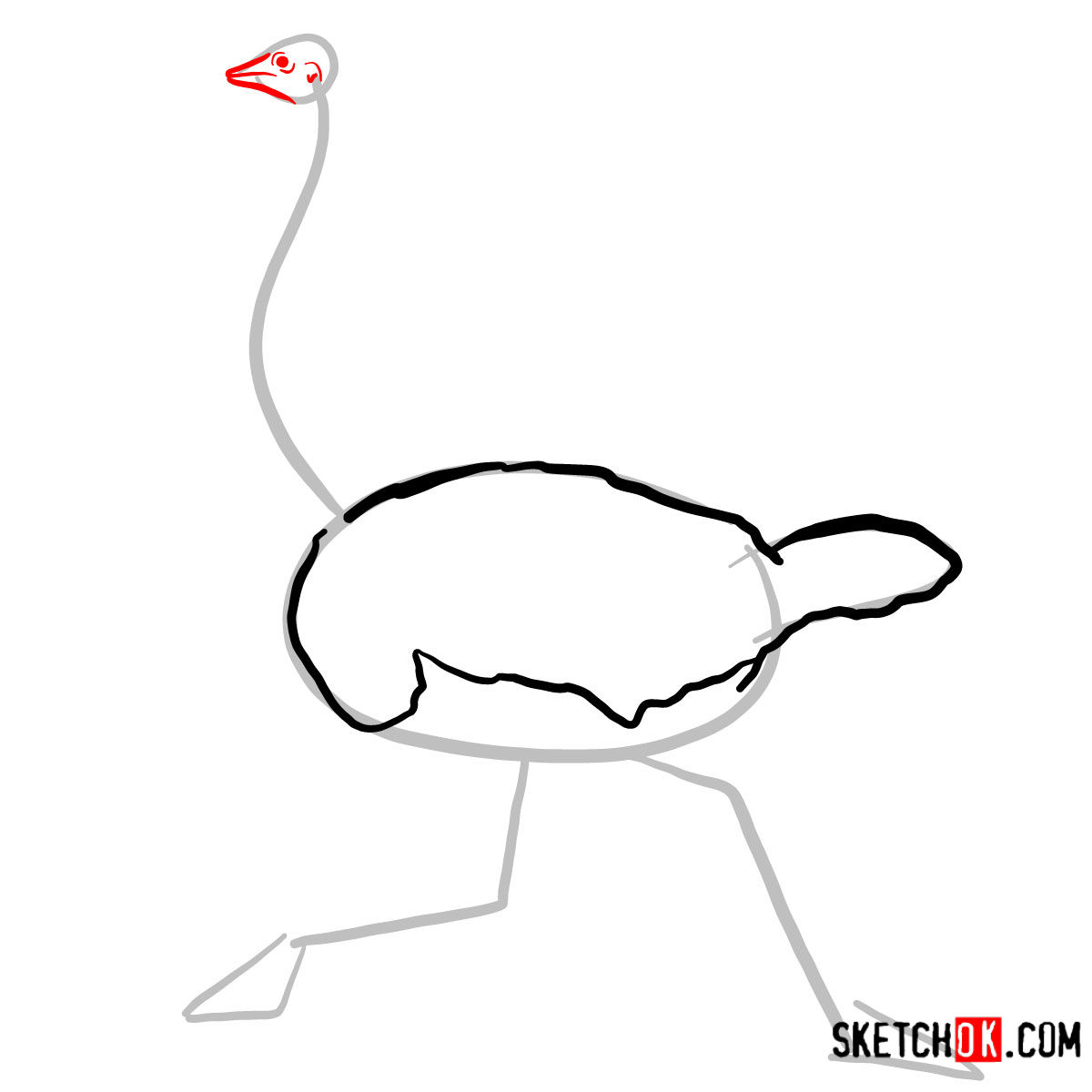
- Small head with eye and flat beak
- Two long thin legs in mid-stride
- Tail feathers fanned out at rear
If you enjoy sketching birds with strong silhouettes, the emperor penguin is another flightless bird with its own bold shape, while the kiwi bird takes the rounded body in a completely different direction. For a long-legged contrast that plays with similar proportions, the flamingo is a good companion study.
Understanding the Step Color System
Each step image uses a three-color system to show exactly what changes at each stage:
- Red Color: lines added in the current step.
- Black Color: lines completed earlier.
- Gray Color: base sketch for structure.
How to Draw an Ostrich: Step-by-Step Tutorial
Finished Your Ostrich Sketch? Show It Off
Once the line art is done, drop your finished drawing in the comments section below. Seeing how different people handle the neck curve and leg angles is genuinely useful for anyone working through the same steps. New tutorials get posted to Facebook and Telegram as soon as they go live, a new video goes up on YouTube every single day based on the guides already on the site, and Pinterest stays updated regularly too. If you want to keep the practice going, the emu face is a fun match since they are close relatives, and the Canada goose brings in another full-body bird to work on. Supporting the project on Patreon helps keep new guides coming, and patrons get access to unique hand-drawn coloring pages as well.